
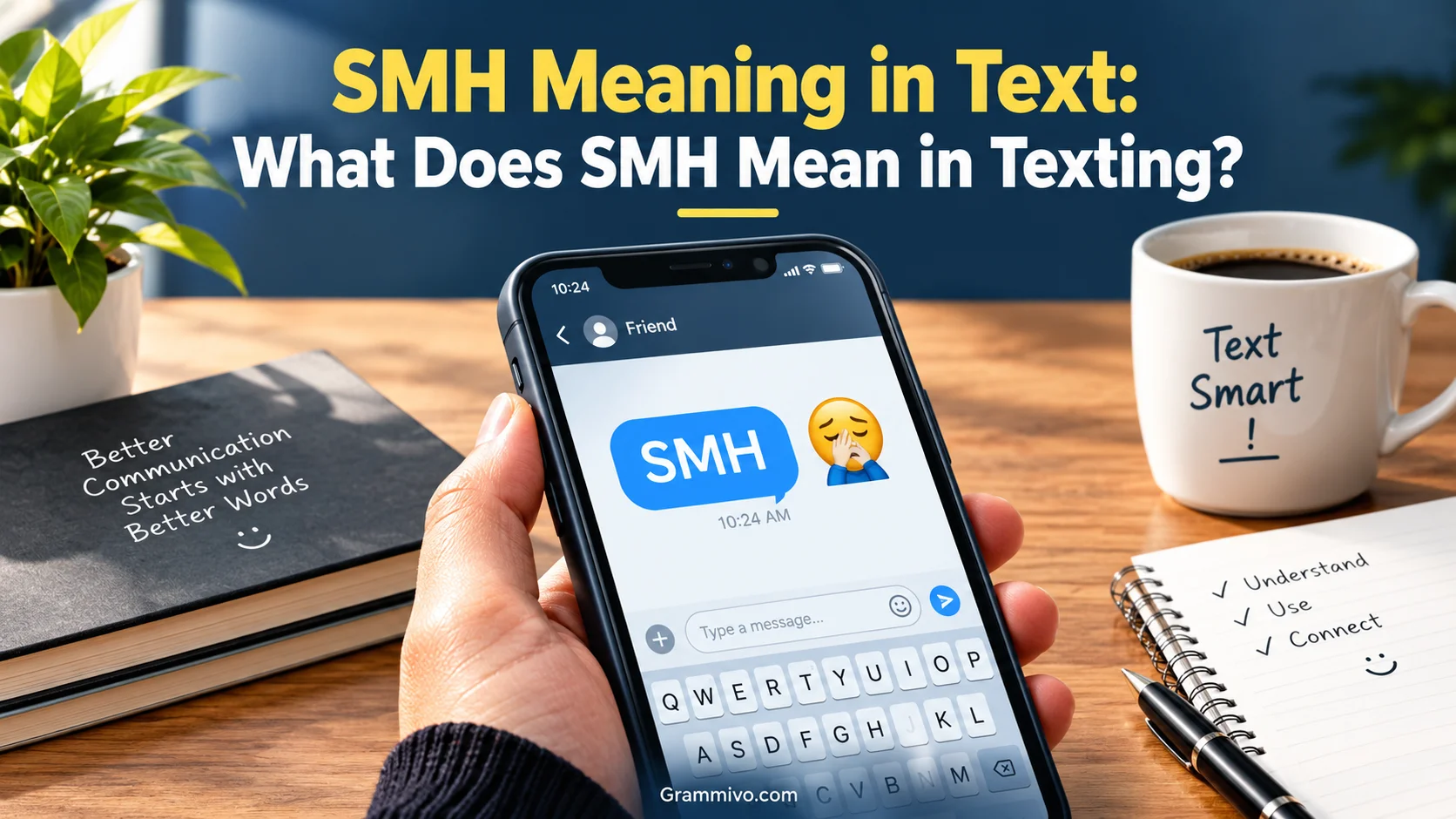
Have you ever received a text that simply says “SMH” and wondered what the other person meant? This popular internet abbreviation appears in text messages, social media comments, group chats, and online conversations. Although it looks simple, its meaning can change depending on the situation and the person using it.
SMH stands for “shaking my head.” People use it to express disappointment, disbelief, frustration, disapproval, or sometimes playful amusement. Imagine someone shaking their head after hearing an unbelievable excuse. SMH conveys that same reaction through a few letters instead of a physical gesture.
For example, if your friend forgets their keys for the third time this week, you might text, “You did it again? SMH 😂.” The abbreviation communicates mild frustration while the laughing emoji makes the message feel playful.
However, SMH doesn’t always mean someone is angry. A person might use it to criticize a careless decision, react to surprising news, or tease a friend who did something silly. Understanding the surrounding conversation helps you interpret the intended tone.
Whether you encountered SMH on Snapchat, TikTok, Instagram, or in a private message, this guide explains its meaning, common uses, related abbreviations, and the best ways to respond.
Quick Answer
SMH means “shaking my head.” It’s an informal texting abbreviation people use to express disappointment, disbelief, frustration, disapproval, or humorous exasperation.
Example:
- Person A: “I studied the wrong chapter for my exam.”
- Person B: “SMH 😭”
Here, Person B reacts with disbelief or sympathy toward the mistake. The crying emoji adds a dramatic or humorous touch rather than necessarily expressing genuine sadness.
People commonly use SMH in text messages, social media comments, online discussions, and casual conversations. It’s generally appropriate for friends and informal chats but may sound dismissive in professional communication.
Comparison Overview
SMH is a short expression with several related uses. The following table summarizes its meaning and how people typically use it.
| Feature | Explanation |
| Full form | Shaking my head |
| Primary meaning | Expressing disbelief, disappointment, or disapproval |
| Other common emotions | Frustration, annoyance, sarcasm, and amusement |
| Tone | Usually negative or disapproving, but sometimes playful |
| Common platforms | Text messages, Snapchat, TikTok, Instagram, Facebook, and X |
| Formality | Informal internet slang |
| Common capitalization | SMH, smh, or Smh |
| Typical placement | At the beginning, middle, or end of a message |
| Example | “You forgot your appointment again. SMH.” |
The key point is that SMH describes a reaction rather than a single emotion. The same abbreviation can express disappointment in one conversation and affectionate teasing in another.
For instance, “SMH, that was a terrible decision” sounds critical. By contrast, “SMH 😂 you really ate the whole pizza?” can communicate playful disbelief.
Main Differences Between SMH Meaning in Text
Although SMH has one widely recognized full form, its emotional meaning varies with context. These distinctions help you understand what someone actually intends.
| Use | What it communicates | Example |
| Disappointment | Someone expected a better outcome | “You canceled again. SMH.” |
| Disbelief | Something seems surprising or hard to believe | “He spent $500 on that? SMH.” |
| Frustration | Someone feels annoyed by a situation | “The internet stopped working again. SMH.” |
| Disapproval | Someone thinks a decision or action was wrong | “She blamed everyone else. SMH.” |
| Humor | Someone reacts to a silly or ridiculous situation | “You put your shirt on backward. SMH 😂.” |
| Sarcasm | Someone uses a mocking or ironic reaction | “Brilliant plan. SMH.” |
These meanings overlap. A person can feel disappointed and frustrated simultaneously, while another might use SMH purely for comic effect.
When interpreting the abbreviation, consider three things: the message surrounding it, the relationship between the people, and any emojis or punctuation. Those clues often reveal more than the letters themselves.
What Does SMH Stand For?
SMH Meaning in Texting
SMH stands for “shaking my head.” The phrase refers to the familiar physical gesture people make when they disagree with something, feel disappointed, or find a situation ridiculous.
In face-to-face conversations, someone might shake their head after hearing an unbelievable excuse. In digital communication, typing SMH recreates that reaction without requiring a long explanation.
For example:
- “You left your lunch at home again. SMH.”
- “He lied about something so obvious. SMH.”
- “SMH, why would anyone do that?”
Each message conveys a reaction to someone else’s behavior or an unexpected situation. The exact emotion depends on the circumstances.
SMH is also convenient because it saves time. Instead of writing, “I can’t believe you did that,” someone can type three letters and communicate a similar reaction.
What Does SMH Mean in a Text Message?
In a private text message, SMH usually expresses a quick emotional response. However, you shouldn’t assume every sender means the same thing.
Consider these examples:
Example one: Disbelief
“SMH, you actually forgot your own birthday?”
The sender finds the situation surprising or difficult to believe.
Example two: Disappointment
“You promised you’d help me move, and you didn’t show up. SMH.”
The sender feels let down by someone’s actions.
Example three: Playful frustration
“SMH 😂 you bought another pair of sneakers?”
The sender may be teasing someone about a familiar habit rather than criticizing them seriously.
Example four: General annoyance
“SMH, the bus left two seconds before I reached the stop.”
Here, the sender expresses frustration with an unfortunate situation rather than another person’s behavior.
The important distinction is that SMH can react to people, events, decisions, mistakes, and everyday inconveniences.
Read More: IMK Meaning in Text: What Does IMK Mean in Texting?
Is SMH Positive or Negative?
SMH generally carries a negative or disapproving tone, but that doesn’t automatically make it rude or hostile.
People often use it when something disappoints them, violates their expectations, or seems foolish. Nevertheless, friends may use the same expression affectionately when joking about each other’s harmless mistakes.
Compare these messages:
- “SMH. That was a selfish thing to do.” This sounds openly critical.
- “SMH 😂 you forgot your coffee on the roof of your car.” This sounds more playful.
- “SMH, another Monday morning.” This communicates mild frustration with a familiar routine.
The emoji, wording, and relationship between the sender and recipient influence the interpretation.
If you’re unsure whether someone is upset, don’t treat the abbreviation as proof. Look at the full conversation or ask what they mean.
What Does SMH Mean on Social Media?
SMH appears across many digital platforms because users often need a short way to react to posts, videos, opinions, and everyday situations. Its core meaning remains the same, although the context can change how it sounds.
SMH Meaning on Snapchat
On Snapchat, SMH commonly appears in private chats, replies to snaps, and conversations between friends.
Someone might send it after seeing a ridiculous picture, hearing an unbelievable story, or learning that a friend made the same mistake again.
Example:
- Friend A: “I sent that embarrassing picture to the wrong group chat.”
- Friend B: “SMH 😭”
The response expresses disbelief and perhaps sympathy. The crying emoji may also suggest that the situation is funny.
Snapchat conversations often rely on shared experiences and inside jokes. As a result, SMH can feel more playful between close friends than it would between strangers.
SMH Meaning on TikTok
On TikTok, users may write SMH in comments or captions when reacting to surprising videos, questionable behavior, or frustrating situations.
For example, someone might comment “SMH” under a video showing a person ignoring an obvious warning. The comment signals disbelief or disapproval without requiring a detailed explanation.
The abbreviation can also appear in humorous videos where the creator deliberately shows an embarrassing mistake. In those cases, it may express secondhand embarrassment or playful exasperation.
However, a comment containing only SMH doesn’t reveal the writer’s entire opinion. The video, caption, and surrounding discussion provide important context.
SMH Meaning on Instagram
On Instagram, SMH commonly appears in direct messages, comments, Stories, and replies to posts.
A user might respond with “SMH” after seeing a disappointing announcement or an unbelievable claim. Friends may also use it when reacting to each other’s jokes, shopping habits, or embarrassing moments.
For example:
“SMH, you posted that picture before checking the background 😂.”
The sender is probably teasing the recipient about an unnoticed detail. Without the emoji or a friendly relationship, the same wording might sound more judgmental.
SMH Meaning on Facebook, X, and Other Platforms
On Facebook and X, SMH can appear in discussions about current events, public behavior, personal experiences, and controversial opinions.
A person might use it to express frustration with a disappointing decision or disbelief at a claim they consider unreasonable.
For example:
“SMH, people really need to read the instructions before complaining.”
This message communicates annoyance and disapproval.
Because online discussions often involve strangers, SMH can sometimes sound dismissive or sarcastic. A short reaction may also be interpreted differently by readers who don’t know the writer’s personality.
Across platforms, the basic definition remains “shaking my head.” The audience and conversation determine its emotional force.
How Is SMH Used in Texting?
People use SMH in several everyday situations. Understanding these common patterns makes the abbreviation easier to recognize and use naturally.
SMH to Express Disappointment
Disappointment occurs when reality falls short of someone’s expectations. SMH can communicate that feeling without a lengthy explanation.
For example:
- “You said you’d call me back yesterday. SMH.”
- “Our team lost after leading the entire game. SMH.”
- “He promised to finish the work and didn’t even start. SMH.”
In each case, the sender reacts to an outcome that feels frustrating or disappointing.
SMH can sound particularly critical when someone repeatedly breaks promises or makes avoidable mistakes. If the situation is serious, though, a direct explanation usually communicates your feelings more clearly.
SMH to Show Disbelief
Sometimes, a situation seems so surprising that you struggle to find the right words. SMH provides a quick reaction.
Examples include:
- “SMH, she paid that much for a broken phone?”
- “You mean he forgot his passport on the day of the flight? SMH.”
- “SMH, I can’t believe they canceled the concert at the last minute.”
Here, the abbreviation conveys astonishment mixed with disbelief. Depending on the circumstances, it may also suggest disappointment or amusement.
Unlike “OMG,” which can express excitement and positive surprise, SMH usually hints that the situation is absurd, frustrating, or difficult to accept.
SMH to Express Frustration
SMH also works when someone feels annoyed by a recurring problem.
Imagine your computer crashes just before you finish an important assignment. You might text a friend, “SMH, my laptop froze again.”
Other examples include:
- “SMH, the printer jammed right before the meeting.”
- “The delivery is late for the third time. SMH.”
- “SMH, I just cleaned this room and it’s already messy.”
Notice that these messages don’t necessarily blame another person. SMH can express frustration with technology, bad luck, inconveniences, or daily routines.
It often communicates mild exasperation rather than intense anger. Still, the surrounding words can make the reaction sound more serious.
SMH as a Sarcastic or Humorous Reaction
Among friends, SMH often functions as a playful response to silly mistakes or predictable behavior.
For example:
- “SMH 😂 you opened the fridge and forgot what you wanted.”
- “You watched the entire series in one night? SMH.”
- “SMH, you managed to burn instant noodles.”
These messages exaggerate the sender’s reaction for comic effect. The abbreviation may imply, “I can’t believe you just did that,” without expressing genuine disappointment.
Sarcasm depends heavily on tone and shared understanding. If the recipient doesn’t recognize the joke, the message may sound insulting instead.
A useful rule is to match the tone to your relationship. Playful teasing works best when both people understand the humor.
SMH Meaning in Different Contexts
The person sending SMH can influence how the message feels. The same abbreviation may sound affectionate, critical, or unprofessional depending on the relationship.
SMH From a Friend
When a friend sends SMH, the message often expresses surprise, disappointment, or playful annoyance.
For instance, if you tell your friend that you forgot your wallet at home, they might respond, “SMH, you’re so forgetful 😂.”
That response likely reflects familiar teasing rather than serious criticism. However, if you’ve disappointed the friend repeatedly, the same abbreviation might signal genuine frustration.
Consider the broader conversation before deciding how to respond.
SMH in a Romantic Conversation
Partners may use SMH when teasing each other, reacting to a silly mistake, or expressing disappointment.
For example:
- “SMH, you ate my leftovers again 😂.”
- “You forgot our dinner reservation? SMH.”
- “SMH, you fell asleep halfway through our movie.”
The first and third examples could be playful. The second might express genuine frustration, especially if the reservation mattered.
SMH alone doesn’t prove that a partner is angry, upset, or dissatisfied with the relationship. If the message concerns a serious issue, a calm conversation will usually reveal more than guessing from an abbreviation.
FAQs:
What Does SMH Mean in Texting?
SMH stands for “shaking my head.” People use it to express disappointment, disbelief, frustration, disapproval, or playful annoyance in digital conversations.
For example, “SMH, you forgot your keys again” communicates frustration or disbelief about a repeated mistake.
What Does SMH Mean From a Girl or a Guy?
SMH means “shaking my head” regardless of who sends it. A girl or a guy might use it to express disappointment, tease a friend, react to surprising news, or criticize someone’s behavior.
The sender’s personality and the conversation matter more than their gender. Don’t assume the message signals anger or romantic interest without additional context.
Does SMH Mean Shaking My Head?
Yes. The standard meaning of SMH in texting and internet slang is “shaking my head.”
It represents the physical gesture people make when expressing disbelief, disappointment, frustration, or disapproval. In digital conversations, the abbreviation communicates that reaction without requiring a literal gesture.
Is SMH Rude or Disrespectful?
SMH can sound rude when someone uses it to dismiss another person’s opinion or criticize their behavior. However, it can also be playful between friends.
For example, “SMH, that was a terrible decision” sounds judgmental, while “SMH 😂 you forgot your coffee again” may be friendly teasing.
Consider the wording, relationship, and situation before deciding whether the message is disrespectful.
What Does SMH Mean on Snapchat?
On Snapchat, SMH generally means “shaking my head.” Users send it in chats or replies to express disbelief, frustration, disappointment, or amusement.
For example, a friend might reply “SMH 😭” after you tell them about an embarrassing mistake. The response may be playful rather than critical.
Conclusion:
SMH means “shaking my head” and serves as a quick way to express disappointment, disbelief, frustration, disapproval, or playful amusement in texting and online conversations. You’ll commonly encounter it on Snapchat, TikTok, Instagram, Facebook, and other digital platforms. Although its core meaning stays consistent, its emotional tone depends on the message, the situation, and the relationship between the people communicating.
