
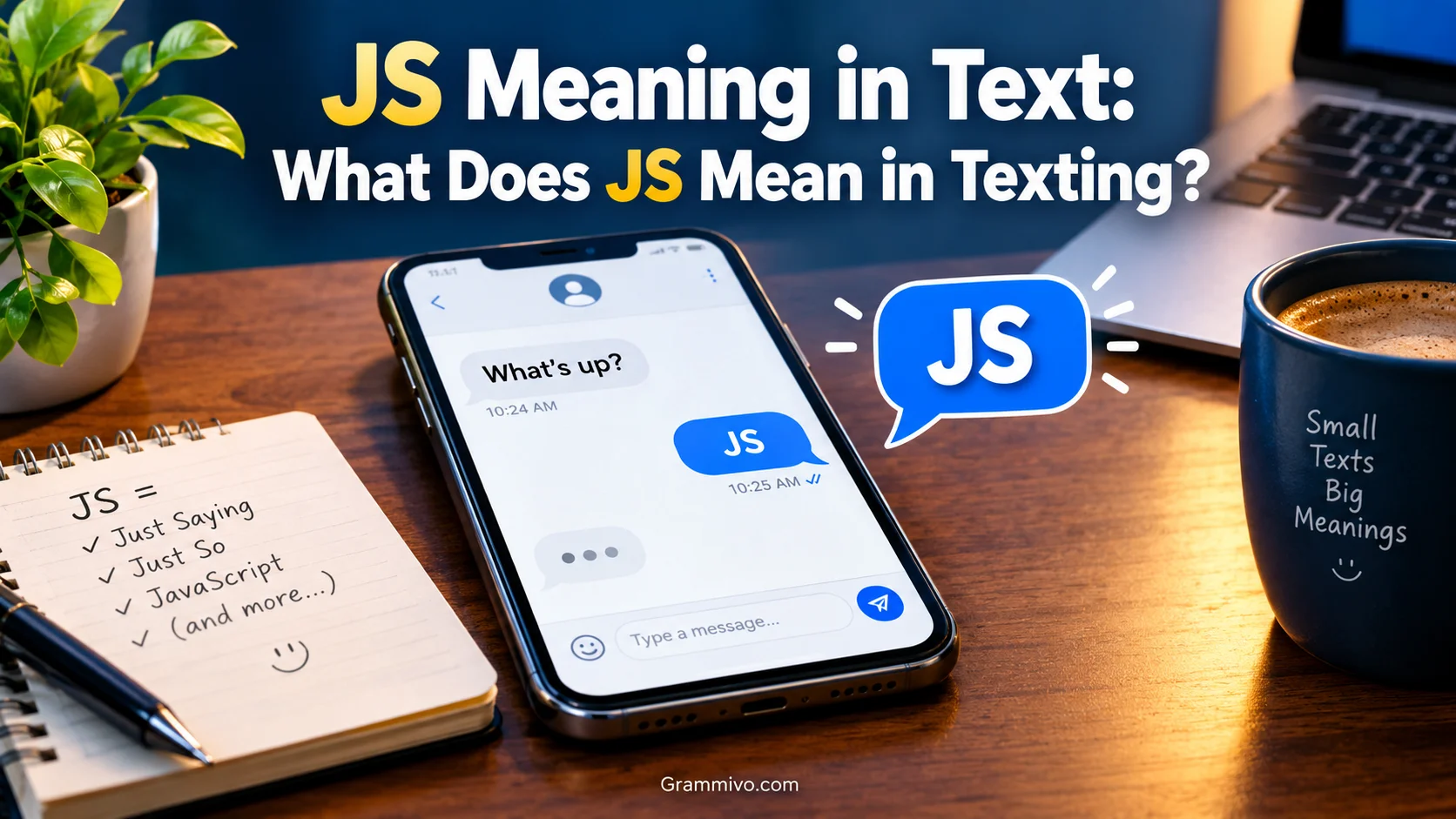
Have you received a message ending with “JS” and wondered what the sender was trying to say? You’re not alone. Texting abbreviations can make everyday conversations confusing, especially when the same letters have different meanings in different situations.
JS usually means “just saying” in text messages, social media comments, and online chats. People use it to share an opinion, make a suggestion, emphasize a point, or add a casual remark. Depending on the wording, it can sound friendly, playful, sarcastic, or slightly critical.
For example, someone might text, “JS, you should get some rest.” In this message, JS introduces a suggestion without making it sound like a strict instruction.
However, JS doesn’t always mean “just saying.” In programming conversations, it commonly stands for JavaScript, a programming language used to create interactive websites and applications. The surrounding conversation helps you figure out which meaning fits.
Quick Answer
JS means “just saying” in texting. People use it to express an opinion, offer advice, make a comment, or emphasize a point. Its tone can be friendly, humorous, blunt, or sarcastic, depending on the message.
Example:
- Person A: “I think you should tell her the truth.”
- Person B: “JS, keeping secrets usually makes things worse.”
Here, JS means “just saying.” The sender is sharing an opinion rather than giving a direct command.
In a technology-related conversation, JS usually stands for JavaScript instead. Always consider the topic before interpreting the abbreviation.
Comparison Overview
JS is a short abbreviation that people commonly use in casual digital communication. Its meaning becomes clearer when you consider where it appears and what the sender is discussing.
| Feature | Explanation |
| Full form | Just saying |
| Primary texting meaning | Sharing an opinion, comment, or suggestion |
| Common platforms | Text messages, Snapchat, Instagram, and online chats |
| Typical tone | Casual, friendly, humorous, blunt, or sarcastic |
| Formality | Informal |
| Alternative meaning | JavaScript in programming contexts |
| Common placement | At the beginning or end of a message |
| Best way to interpret it | Read the complete message and consider the context |
The key point is that JS doesn’t have one fixed emotional meaning. A friend might use it to make a harmless joke, while someone else might use it before delivering an uncomfortable opinion.
Main Differences Between JS Meaning in Text
Understanding the different ways people use JS helps you interpret messages more accurately. Although “just saying” remains its primary meaning in casual texting, the abbreviation can serve several conversational purposes.
| Usage | Example | Intended meaning |
| Sharing an opinion | “JS, that restaurant is overrated.” | The sender is expressing a personal view. |
| Giving advice | “JS, you should save some money.” | The sender is offering a suggestion. |
| Making a criticism | “JS, you could’ve told me earlier.” | The sender is expressing disappointment. |
| Making a joke | “JS, your dog has better fashion sense than me.” | The sender is being playful. |
| Emphasizing a point | “That was a terrible idea, JS.” | The sender wants to reinforce an opinion. |
| Discussing programming | “The website uses JS.” | JS refers to JavaScript. |
These examples show why context matters. The abbreviation stays the same, but the message’s meaning and tone can change considerably.
What Does JS Mean in Texting?
In texting, JS stands for “just saying.” It’s an informal expression that introduces or emphasizes a personal comment. People often use it when they want to express an opinion without making the conversation feel overly serious.
For example, imagine your friend keeps ordering expensive takeout while trying to save money. You might send this message:
“JS, cooking at home could help you save a lot.”
You’re offering advice, but you’re not necessarily demanding that your friend change their habits. The phrase makes your comment sound conversational.
However, JS doesn’t automatically make a statement polite or harmless. Consider this message:
“JS, you really need to stop making excuses.”
Although the sender uses a casual abbreviation, the message still sounds critical. The words that follow JS often matter more than the abbreviation itself.
People generally use JS in informal conversations because it saves time and fits naturally into digital communication. In formal writing, spelling out “just saying” or expressing the point directly usually works better.
What Does JS Stand for in Text Messages?
The most common interpretation of JS in casual texting is “just saying.” The phrase signals that the sender is adding a thought, opinion, or observation to the conversation.
It can communicate several related ideas:
- “This is what I think.”
- “I’m offering a suggestion.”
- “I wanted to point something out.”
- “Don’t take this too seriously.”
- “I want to emphasize my opinion.”
The sender’s actual intention depends on the complete message. For instance, “JS, you’re doing great” sounds encouraging, while “JS, that outfit doesn’t match” might sound critical.
JS can also appear after a statement rather than before it. Someone might write, “You’d look great with shorter hair, JS.” Here, the abbreviation adds a casual afterthought to the suggestion.
Read More: Hygiene vs. Hygene: Which Spelling Is Correct?
Why Do People Use JS Instead of Writing the Full Phrase?
Texting abbreviations make messages shorter and faster to type. People who communicate frequently through messaging apps often develop shorthand that feels natural to them.
JS also adds a conversational flavor. Instead of writing a long explanation, someone can introduce a quick thought with two letters.
However, abbreviations sometimes create confusion. A recipient unfamiliar with JS might not understand the message, especially when the conversation involves technical subjects.
The best approach is simple: use JS with people who understand the abbreviation, and write the full phrase when clarity matters.
How Is JS Used in Text Messages?
JS can perform several roles in everyday conversations. Understanding these uses helps you recognize whether someone is joking, offering advice, or making a serious point.
JS to Share an Opinion
People frequently use JS when expressing personal preferences or judgments. The phrase signals that the statement represents their perspective rather than an established fact.
Example:
- Alex: “Everyone says that movie is amazing.”
- Jordan: “JS, I thought the ending was disappointing.”
Jordan uses JS to introduce a personal opinion. The phrase doesn’t change the opinion itself, but it gives the comment a casual tone.
You might also see messages such as:
- “JS, I prefer the original version.”
- “That restaurant is expensive, JS.”
- “JS, I think we should leave earlier.”
In each example, JS helps introduce or emphasize a viewpoint. It doesn’t guarantee that the recipient will agree.
JS to Make a Suggestion
Another common use of JS involves offering advice without sounding overly demanding. People use the phrase when they want to suggest a solution while leaving the decision to someone else.
Example:
“JS, you might want to check the weather before leaving.”
This message offers practical advice. The sender isn’t necessarily ordering the recipient to do anything.
Other examples include:
- “JS, you should apply for that job.”
- “JS, taking a break might help.”
- “You could ask her directly, JS.”
The phrase works best when the suggestion is genuinely helpful. If the advice sounds judgmental, adding JS won’t automatically make it easier to accept.
JS to Make a Blunt or Critical Comment
Sometimes people use JS before expressing disappointment or pointing out a mistake. In these situations, the abbreviation may soften the introduction, but the underlying criticism remains.
Consider this exchange:
- Mia: “I forgot to bring the documents.”
- Chris: “JS, you had the whole week to prepare.”
Chris is expressing frustration. The phrase “just saying” may make the criticism sound less direct, but it doesn’t remove the sting.
Common examples include:
- “JS, you should’ve listened the first time.”
- “You could’ve handled that better, JS.”
- “JS, that wasn’t a very thoughtful thing to say.”
If you receive a message like this, consider the relationship and the surrounding conversation before deciding whether the sender intended to hurt your feelings.
JS to Add Humor or Sarcasm
Friends sometimes use JS to deliver jokes, teasing remarks, or exaggerated observations. The abbreviation can make the statement feel like a casual punchline.
Example:
“JS, your coffee addiction deserves its own documentary.”
This message is likely playful if the sender and recipient regularly joke with each other.
Other examples include:
- “JS, your cat clearly owns the house.”
- “You spend more time choosing a movie than watching one, JS.”
- “JS, that pizza disappeared suspiciously fast.”
Sarcasm requires more care because written messages don’t always communicate tone clearly. A joke that sounds funny between close friends might feel insulting to someone who doesn’t know the sender well.
JS to Soften a Statement
People sometimes add JS to make a difficult observation sound less forceful. They may want to express their thoughts without turning the conversation into an argument.
For example:
“JS, I think we should discuss this before making a decision.”
This message introduces a concern without directly challenging the other person’s judgment.
However, the phrase can sometimes have the opposite effect. A statement such as “JS, nobody asked for your opinion” may sound dismissive or hostile.
Remember: JS can soften an introduction, but it can’t guarantee a friendly tone. Your choice of words still matters.
JS Meaning in Different Contexts
The meaning and tone of JS can change depending on the relationship between the people communicating and the platform they use.
JS Meaning Between Friends
Among friends, JS often appears in casual conversations about everyday activities, personal choices, relationships, and shared experiences.
For example:
“JS, you deserve a vacation after this week.”
This message sounds supportive. The sender is expressing an opinion while showing concern for the recipient.
Friends might also use JS to tease one another or offer unsolicited advice. Because they understand each other’s personalities, they can often interpret the intended tone more easily.
Still, familiarity doesn’t eliminate misunderstandings. If a message feels unusually harsh, asking for clarification is better than assuming the worst.
JS Meaning in Romantic Conversations
In romantic conversations, JS can introduce a compliment, suggestion, hint, or criticism. The abbreviation itself doesn’t indicate romantic interest.
Consider these examples:
- “JS, you looked really cute today.”
- “JS, we should spend more time together.”
- “You could’ve texted me when you got home, JS.”
The first message sounds complimentary. The second suggests a desire for more time together. The third may express concern or disappointment, depending on the circumstances.
If someone you’re interested in uses JS, don’t assume they’re flirting based on those letters alone. Look at the message, the relationship, and the broader pattern of communication.
FAQs:
What Does JS Mean From a Girl?
JS usually means “just saying” when a girl uses it in a text message. She might be sharing an opinion, making a suggestion, teasing you, or emphasizing a comment.
The abbreviation doesn’t automatically mean she’s flirting or expressing romantic interest. Consider the complete message and your relationship with her before interpreting it.
What Does JS Mean From a Guy?
When a guy uses JS in casual texting, it usually means “just saying.” He may use it to offer advice, express an opinion, make a joke, or add emphasis.
The abbreviation doesn’t reveal his feelings by itself. The message’s wording and context provide more useful clues.
Does JS Mean Just Saying?
Yes. “Just saying” is a common meaning of JS in text messages and online conversations. People use it to introduce or emphasize a comment, suggestion, or personal opinion.
However, JS can stand for JavaScript in programming discussions. Context determines which interpretation makes sense.
Is JS Rude in a Text?
No, JS isn’t inherently rude. It can introduce a friendly suggestion, a compliment, a joke, or an ordinary observation.
However, people sometimes use “just saying” before criticism or sarcastic remarks. If the rest of the message sounds harsh, the abbreviation won’t necessarily make it polite.
What Does JS Mean on Snapchat?
On Snapchat, JS commonly means “just saying” in informal chats, replies, and conversations with friends.
For example, “JS, that filter looks hilarious” introduces a casual observation. If the conversation involves programming or another specialized topic, JS may have a different meaning.
Conclusion:
JS usually means “just saying” in text messages, social media conversations, and online chats. People use it to express opinions, offer advice, make observations, and add humor or emphasis to their messages. Its tone depends on the words surrounding it. A message containing JS might sound supportive and friendly, or it might feel blunt, sarcastic, or critical. The abbreviation alone doesn’t reveal the sender’s intentions.
