
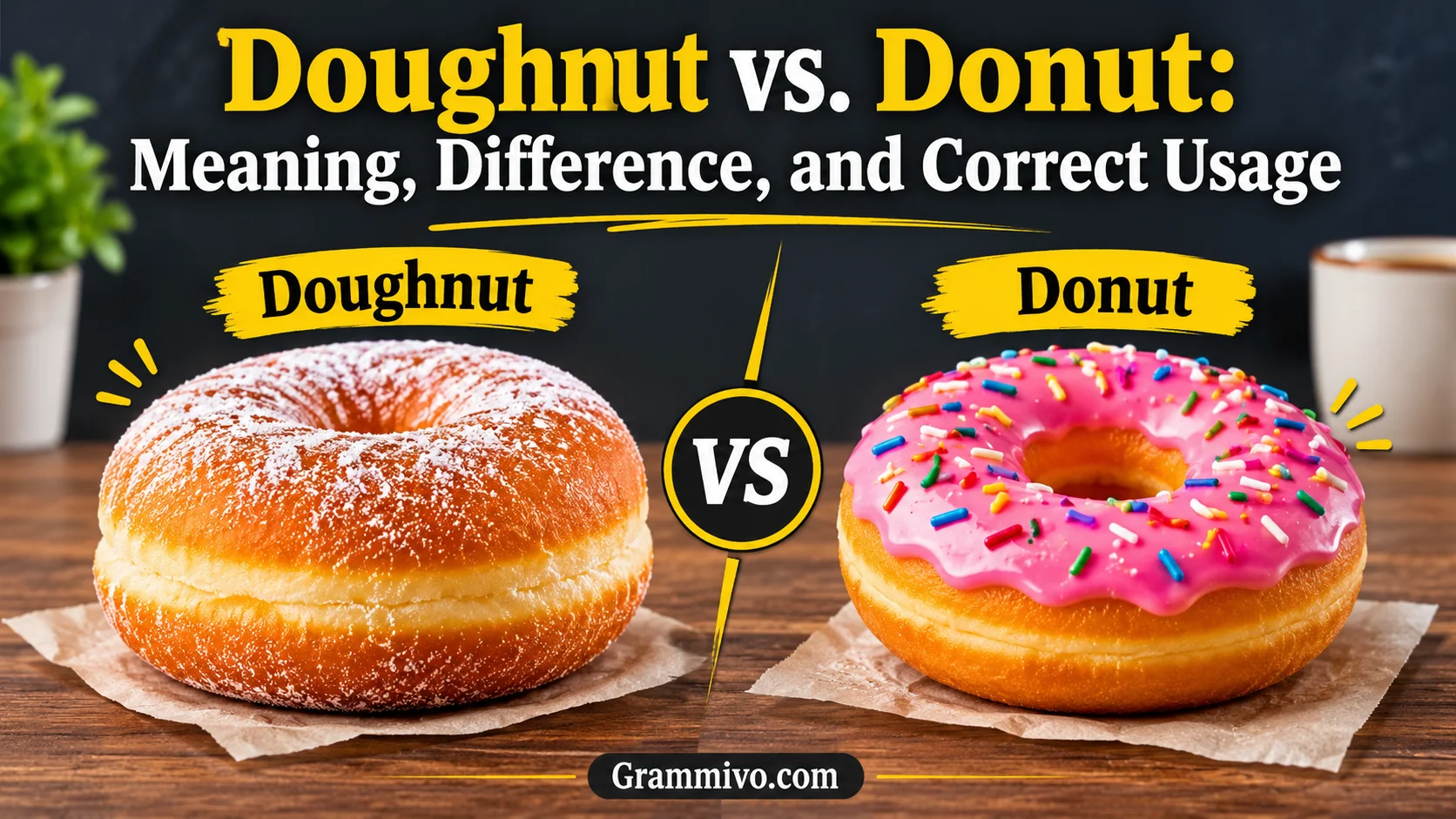
When you’re writing about everyone’s favorite sweet treat, should you spell it doughnut or donut? Both versions appear on bakery signs, restaurant menus, grocery packages, and everyday conversations. However, their different spellings often leave writers wondering which one they should choose.
The good news is that neither spelling is incorrect. Doughnut is the traditional form while donut is a shorter variant that has become especially popular in American English. Both words describe the same delicious fried pastry, whether it’s covered in chocolate, dipped in glaze, or filled with jelly.
Although the two spellings share the same meaning and pronunciation, their history and regional preferences make them worth understanding. Knowing when to use each version can help you write more naturally and consistently.
Quick Answer
Both doughnut and donut are correct spellings of the same sweet, fried pastry. Doughnut is the traditional spelling and remains common in British English and formal writing. Donut is a shorter spelling widely used in American English, particularly in restaurant names, menus, advertising, and everyday communication. You can use either spelling, but consistency matters.
Comparison Overview
| Feature | Doughnut | Donut |
| Meaning | A sweet, fried pastry | A sweet, fried pastry |
| Spelling | Traditional spelling | Shortened spelling |
| Pronunciation | /ˈdoʊnʌt/ | /ˈdoʊnʌt/ |
| Word type | Noun | Noun |
| American English | Common | Very common |
| British English | Traditional and common | Recognized but less traditional |
| Formal writing | Widely accepted | Widely accepted |
| Informal writing | Common | Very common |
| Meaning difference | None | None |
Main Differences Between Doughnut and Donut
The biggest difference between doughnut vs. donut is spelling rather than meaning. Both words identify the same type of pastry, and neither changes how you pronounce the word.
However, a few distinctions explain why writers and businesses sometimes prefer one version over the other.
Difference in Spelling
The most obvious difference is the number of letters in each word. Doughnut contains eight letters while donut contains five.
The traditional spelling combines dough with nut. The shorter version removes the letters that make the word look more complicated without changing its pronunciation.
For example:
- I bought a chocolate doughnut from the bakery.
- I bought a chocolate donut from the bakery.
Both sentences are correct. The only difference is the spelling.
Difference in Meaning
There is no difference in meaning between these two words. Both describe a small, usually sweet pastry made from dough and cooked in hot oil.
You can use either spelling when describing:
- Ring-shaped pastries with holes in the middle.
- Filled pastries containing jelly, custard, or cream.
- Glazed pastries covered with sugar or chocolate.
- Cake-style pastries made with a denser batter.
- Specialty pastries topped with nuts, sprinkles, or frosting.
For example, a glazed donut and a glazed doughnut refer to the same food.
Difference in American and British English Usage
Regional preferences help explain why both spellings remain popular.
In the United States, donut appears frequently in restaurant branding, advertising, menus, and everyday writing. However, doughnut remains completely acceptable and appears in American dictionaries and publications.
In British English, doughnut is the more traditional spelling. British writers generally favor this version in everyday and formal contexts.
These are preferences rather than strict grammatical rules. You may encounter either spelling on both sides of the Atlantic.
Difference in Formal and Informal Writing
Some writers assume that doughnut belongs in formal writing while donut sounds casual. That distinction isn’t a strict rule.
Both spellings are accepted English words. Your choice should depend on your audience, publication style, and consistency.
For example:
- Formal: The bakery produces fresh doughnuts every morning.
- Informal: Let’s grab some donuts after work.
- Business: The shop sells glazed donuts and specialty coffee.
You don’t need to avoid donut in professional writing. It works perfectly well when it matches your preferred style.
Difference in Pronunciation
Despite their different appearances, both spellings have the same pronunciation.
In American English, both are pronounced:
DOH-nut (/ˈdoʊnʌt/)
The first syllable sounds like dough while the second sounds like nut. The spelling difference doesn’t create a different sound.
This makes the two versions interchangeable when speaking. You only need to consider spelling when writing.
What Does Doughnut Mean?
A doughnut is a sweet pastry typically prepared from flour-based dough and cooked by deep-frying. Bakers often add sugar, glaze, frosting, or other toppings to give it extra flavor.
Traditional doughnuts usually have a ring shape with a hole in the center. However, many varieties contain fillings such as jelly, custard, or cream.
Doughnuts come in different textures and flavors. Some have a light, airy consistency while others are dense and cake-like.
Common varieties include:
- Glazed doughnuts: Covered with a sweet, often translucent sugar glaze.
- Jelly doughnuts: Filled with fruit jam or jelly.
- Chocolate doughnuts: Coated with chocolate icing or frosting.
- Custard doughnuts: Filled with smooth vanilla or flavored custard.
- Cake doughnuts: Made with a denser batter and a crumbly texture.
Examples of Doughnut in Sentences
Here are some natural examples showing how to use doughnut correctly:
- I picked up a fresh doughnut on my way to work.
- She ordered a chocolate-glazed doughnut with her coffee.
- The bakery makes homemade doughnuts every morning.
- He prefers jelly-filled doughnuts over plain ones.
- We bought a dozen doughnuts for the office meeting.
In each example, doughnut functions as a noun. It identifies a specific food rather than an action or description.
What Does Donut Mean?
A donut is simply another spelling of doughnut. It describes the same sweet pastry and follows the same pronunciation and grammatical rules.
The shorter spelling has gained considerable popularity in the United States. You’ll frequently see it in bakery names, food packaging, advertising, and casual conversations.
One reason for its popularity is its simplicity. The word donut is shorter, easier to fit into signs, and visually straightforward.
However, its popularity doesn’t make doughnut outdated or incorrect. Both forms remain in use.
Examples of Donut in Sentences
These examples demonstrate how donut works in everyday American English:
- I grabbed a glazed donut before heading to the office.
- My favorite donut shop opens at six in the morning.
- She brought chocolate donuts for everyone at the party.
- Would you like a donut with your afternoon coffee?
- The children decorated their own donuts with colorful sprinkles.
Notice that the shorter spelling fits naturally into every sentence. You don’t need to change the sentence structure when choosing donut instead of doughnut.
Is Doughnut or Donut More Common in American English?
In the United States, donut has become an especially familiar spelling. You’ll see it on bakery signs, restaurant menus, grocery products, and promotional materials.
One reason is its use in American food branding. Businesses often favor shorter words because they’re easy to recognize and fit neatly into logos and storefront signs.
For example, Dunkin’ uses the shorter spelling in its brand name. Its familiar name has helped make donut recognizable to millions of American customers.
However, Americans haven’t abandoned the traditional spelling. Newspapers, cookbooks, dictionaries, and food writers still use doughnut regularly.
Consider these examples:
- The bakery sells fresh donuts every morning.
- Homemade doughnuts taste delicious with coffee.
- We ordered a dozen glazed donuts for breakfast.
- The cookbook includes a traditional doughnut recipe.
All four sentences use correct American English.
Practical tip: If you’re writing for an American audience, donut is a natural choice. However, doughnut works just as well.
Is Doughnut or Donut British English?
In British English, doughnut is the traditional and more familiar spelling. British dictionaries and general writing commonly use this longer form.
The word also appears in British recipes, supermarket packaging, bakery advertisements, and everyday conversations.
Although donut is recognizable in the United Kingdom, it doesn’t have the same traditional position as doughnut.
For example:
- I bought a jam-filled doughnut from the bakery.
- The children shared chocolate-covered doughnuts.
- She made homemade doughnuts for the weekend.
British English also has regional food terminology that can differ from American usage. For example, jam-filled doughnuts are particularly familiar in British bakeries.
However, these regional differences don’t change the central spelling rule. Both doughnut and donut describe the same food.
Read More: 20 Other Ways to Say “Thank God” (With Examples)
When to Use Doughnut
Although both spellings are correct, certain situations make doughnut a natural choice.
Choose doughnut when you want to follow traditional spelling conventions or match a publication’s preferred style.
Here are some situations where the longer spelling works particularly well:
- British English writing: Use doughnut when following traditional British spelling preferences.
- Traditional recipes: Older cookbooks and established recipes frequently use this spelling.
- General food writing: It works naturally in articles, descriptions, and educational content.
- Consistent editorial style: Choose it when your publication already uses the traditional form.
- Formal descriptions: It fits comfortably into professional writing and food-related reports.
Doughnut Examples in Different Contexts
The following examples show how the word works across different situations.
In a recipe:
Add the flour, sugar, and yeast before preparing the doughnuts for frying.
In a restaurant description:
Our bakery serves freshly prepared doughnuts with homemade chocolate glaze.
In everyday conversation:
I picked up two strawberry-filled doughnuts for dessert.
In an educational article:
A traditional doughnut usually contains wheat flour, sugar, and other baking ingredients.
Each sentence uses doughnut naturally without changing its meaning.
When to Use Donut
The shorter spelling is especially useful when writing for an American audience. It appears frequently in commercial settings and everyday communication.
Choose donut in these situations:
- American food businesses: Many American shops and brands use the shorter spelling.
- Restaurant menus: It works naturally in food descriptions and menu listings.
- Advertising: Shorter wording can make promotional messages easier to read.
- Social media: It fits casual posts, captions, and food-related conversations.
- Everyday writing: It sounds completely natural in American English.
- Branding: Businesses may choose it because of its shorter visual appearance.
Donut Examples in Different Contexts
Here are several examples showing how Americans commonly use donut.
In a restaurant menu:
Choose between our glazed donut, chocolate donut, or cinnamon sugar donut.
In an advertisement:
Get a free donut with every large coffee purchase this Friday.
On social media:
Nothing makes Monday better than a fresh donut and hot coffee.
In everyday conversation:
Let’s stop at the donut shop before heading home.
These examples demonstrate why the shorter spelling works well in casual and commercial settings.
Doughnut vs. Donut: Examples in Sentences
Sometimes, seeing both spellings in complete sentences makes their relationship easier to understand.
Neither version requires a different grammatical structure. You can replace one with the other without changing the sentence’s meaning.
Examples Using Doughnut
- The local bakery prepares fresh doughnuts every morning.
- I prefer a plain doughnut with my morning coffee.
- She bought a dozen doughnuts for her coworkers.
- The children decorated their doughnuts with colorful icing.
- My favorite doughnut contains strawberry filling.
- We stopped for doughnuts during our road trip.
- He ordered a cinnamon-sugar doughnut after lunch.
Examples Using Donut
- The coffee shop sells freshly glazed donuts.
- I usually eat one donut with breakfast.
- They brought chocolate donuts to the family gathering.
- Her favorite donut has vanilla frosting and sprinkles.
- We visited a popular donut shop downtown.
- He bought a box of assorted donuts for the office.
- The children enjoyed decorating their own donuts.
Examples Using Both Spellings in Context
The following pairs show how both spellings communicate exactly the same idea.
| Using Doughnut | Using Donut |
| I bought a glazed doughnut. | I bought a glazed donut. |
| She loves chocolate doughnuts. | She loves chocolate donuts. |
| The bakery makes fresh doughnuts. | The bakery makes fresh donuts. |
| He ordered a jelly-filled doughnut. | He ordered a jelly-filled donut. |
| We shared a box of doughnuts. | We shared a box of donuts. |
The meaning stays identical in every pair. Your spelling choice simply reflects your preferred writing style.
Is Doughnut or Donut the Original Spelling?
Doughnut is the older spelling. It developed from the combination of dough and nut, reflecting an early preparation method involving small pieces of dough.
One of the earliest well-known printed uses appeared in Washington Irving’s 1809 book A History of New York. Irving described small balls of sweetened dough fried in hog’s fat.
These early pastries weren’t necessarily identical to every modern doughnut. However, the description shows that fried sweet dough already had a recognizable place in American food culture.
The shorter spelling, donut, appeared later as a simplified alternative. It gradually gained popularity, particularly in the United States.
Over time, both spellings became established in everyday English.
The historical distinction is straightforward:
- Doughnut: The original traditional spelling.
- Donut: A later shortened spelling.
- Modern usage: Both spellings are accepted and refer to the same pastry.
The shorter form didn’t replace the traditional one completely. Instead, English speakers continued using both versions.
FAQs:
Is Doughnut or Donut Correct?
Both doughnut and donut are correct English spellings. They describe the same sweet, fried pastry and have identical pronunciations. Doughnut is the traditional form while donut is a shorter variant commonly used in American English. You can use either spelling without making a grammatical mistake.
Is Donut an American Spelling?
Yes, donut is particularly popular in American English. You’ll frequently find it in restaurant names, bakery advertisements, grocery packaging, and everyday conversations. However, Americans also use doughnut, especially in traditional recipes and general writing.
Why Are There Two Spellings of Doughnut?
The two spellings developed because English speakers adopted a shorter version of the traditional word. Doughnut appeared first while donut emerged later as a simplified alternative. Both spellings eventually became established through common usage.
Do Doughnut and Donut Mean the Same Thing?
Yes, both words have exactly the same meaning. They describe a sweet pastry usually made from dough and cooked in hot oil. Whether you order a chocolate donut or a chocolate doughnut, you’ll receive the same type of food.
Which Spelling Is More Common in the United States?
Donut is especially familiar in the United States because of its widespread use in commercial branding and everyday communication. Nevertheless, doughnut remains common in American dictionaries, cookbooks, newspapers, and food-related articles.
Conclusion:
The difference between doughnut vs. donut comes down to spelling rather than meaning. Both words describe the same delicious pastry and share identical pronunciations. Doughnut is the traditional spelling and remains especially common in British English. Donut is a shorter alternative that has gained widespread popularity in the United States.
