
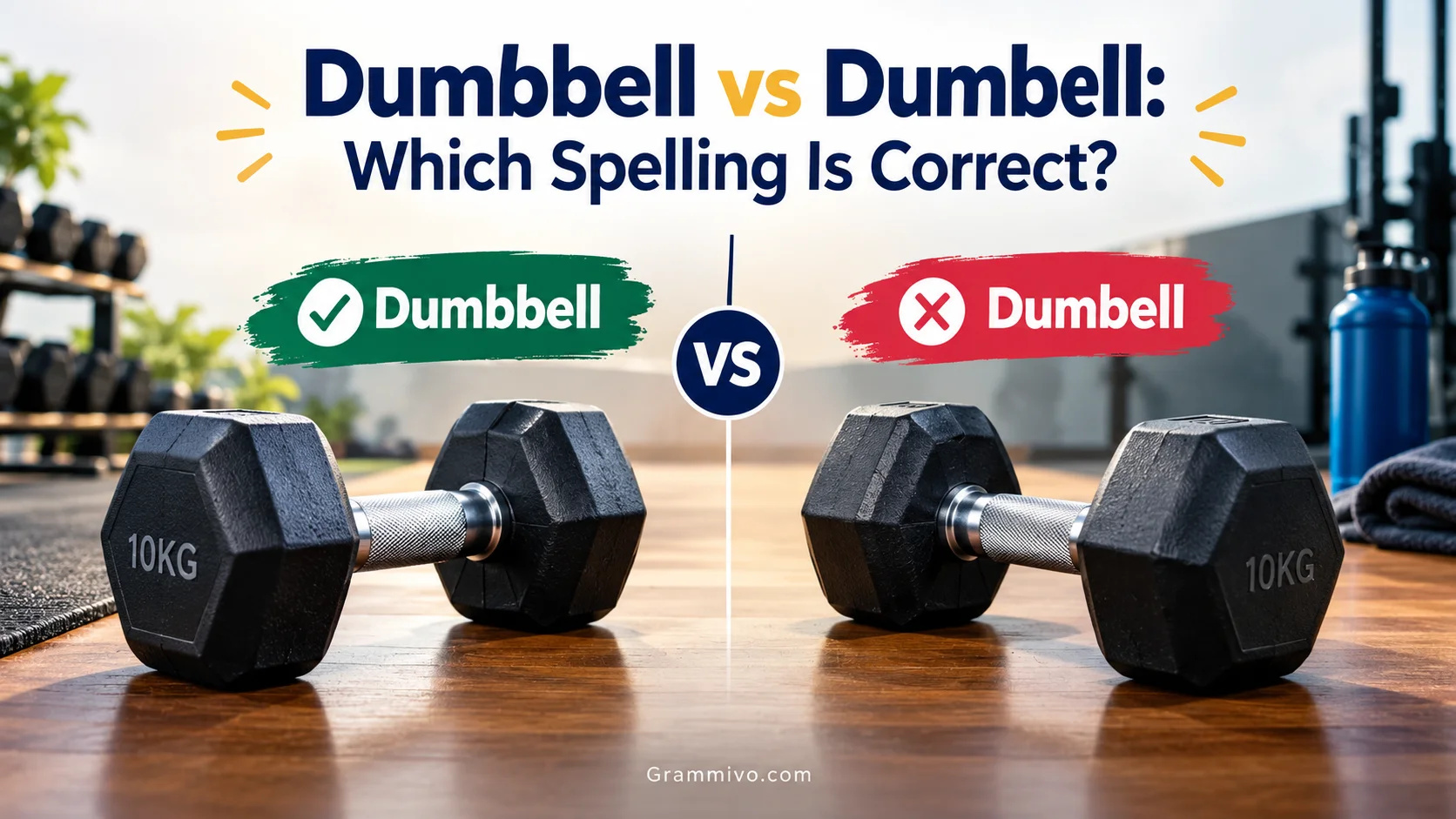
If you’ve ever typed “dumbell” instead of “dumbbell,” you’re definitely not alone. The two spellings look almost identical, and the pronunciation doesn’t make the difference obvious. That small missing b creates a surprisingly common spelling mistake.
The correct spelling is dumbbell. The spelling dumbell is incorrect when you mean the handheld exercise weight. The reason becomes much easier to remember once you look at how the word is formed: dumb + bell = dumbbell.
This guide explains dumbbell vs dumbell in detail, including the correct spelling, meaning, pronunciation, word origin, plural form, examples, common mistakes, and an easy trick that can help you remember the double b.
Quick Answer
Dumbbell is the correct spelling.
Dumbell is a common misspelling and isn’t the standard spelling of the English word.
| Spelling | Correct? | Meaning |
| Dumbbell | Yes | A handheld weight used for exercise; also an informal term for a foolish person |
| Dumbell | No | Common misspelling of dumbbell |
The easiest way to remember the spelling is to separate the word into two parts:
DUMB + BELL = DUMBBELL
That second word, bell, supplies another b. As a result, dumbbell contains two b’s in the middle.
Why Is Dumbbell the Correct Spelling?
The spelling dumbbell comes from the way the word developed as a compound. It combines dumb and bell.
The important part for spelling is bell. When the two parts come together, the letters don’t disappear simply because they meet. The result is:
dumb + bell → dumbbell
That gives the word two consecutive b’s.
This is the main reason dumbell is incorrect. It looks plausible because English pronunciation doesn’t clearly highlight both b’s. When someone hears dumbbell, they may naturally imagine the spelling dumbell.
Written English doesn’t always follow what your ear expects, though.
Consider these forms:
- dumb + bell = dumbbell
- hand + bag = handbag
- foot + ball = football
- sun + flower = sunflower
Compound words often preserve recognizable parts of their original words. In dumbbell, recognizing bell makes the spelling much easier.
Why Do People Spell It Dumbell?
The dumbbell vs dumbell confusion mainly comes from pronunciation and visual familiarity.
When you say dumbbell, you don’t usually pronounce the two b’s as two separate sounds. The word sounds roughly like “DUM-bel.” Because the pronunciation doesn’t emphasize the double consonant, writers can easily omit one letter.
Typing habits make the problem worse. Someone who knows the word perfectly may type dumbell without noticing the missing b.
Here are some reasons the misspelling appears:
- The two b’s aren’t obvious in pronunciation.
- Dumbell visually looks like a reasonable English word.
- People may associate the ending with -bell but forget the first b.
- Fast typing encourages small spelling errors.
- Spell-checkers don’t always catch every mistake in every context.
- Search engines often still understand what someone means when they type dumbell.
The last point matters. If you search for dumbell, you’ll often find results about dumbbells. Search engines can understand likely spelling variations and typos.
That doesn’t make dumbell correct, though. If you’re writing an article, school assignment, product description, workout plan, or professional document, use dumbbell.
What Does Dumbbell Mean?
The word dumbbell has two established meanings. One relates to exercise equipment, while the other describes a person in informal language.
Dumbbell as Exercise Equipment
A dumbbell is a short bar or handle with a weight attached to each end. People commonly use dumbbells for resistance training and general strength exercises.
Unlike a barbell, a dumbbell is designed to be held in one hand. You can also use a pair of dumbbells simultaneously.
Common dumbbell exercises include:
- Biceps curls
- Shoulder presses
- Chest presses
- Dumbbell rows
- Lateral raises
- Goblet squats
- Lunges
- Romanian deadlifts
- Triceps extensions
- Chest flyes
Dumbbells come in many forms. Some have a fixed weight, while adjustable models let users change the resistance by adding or removing plates.
The word therefore appears frequently in fitness, sports, physical education, home-gym, and strength-training contexts.
Dumbbell as an Informal Term for a Person
Dumbbell also has an informal figurative meaning. It can describe a person considered stupid or foolish.
For example:
“Don’t be a dumbbell.”
In this use, the word doesn’t refer to exercise equipment. It’s an informal insult or criticism.
Because it can sound rude, context matters. The term may appear humorously in older writing or casual conversation, but it isn’t usually appropriate in formal or respectful communication.
Dumbbell vs Dumbell Pronunciation
The pronunciation can explain why the spelling causes so much confusion.
Dumbbell is commonly pronounced approximately:
DUM-bel
Its phonetic representation is generally given as /ˈdʌm.bel/.
The first syllable receives the main stress. The second syllable sounds like “bell.”
The important spelling lesson is this: pronunciation doesn’t clearly reveal the double b.
When you say the word naturally, you’re not stopping between dumb and bell. The two parts blend together.
That’s why the following mistake feels natural:
dumb + ell → dumbell
But the correct construction is:
dumb + bell → dumbbell
So if you’re unsure, don’t rely on pronunciation. Think about the word’s structure instead.
Dumbbell Word Origin
The history of dumbbell makes the spelling more interesting.
The word originally referred to an apparatus associated with bell-ringing practice. Historical bell-ringing exercises could involve equipment that imitated the action or movement of ringing a bell without producing the normal sound.
The word combines:
- dumb, meaning silent or unable to speak
- bell, referring to the bell associated with the apparatus
In this historical sense, a “dumb bell” was essentially a silent bell.
Over time, the term became associated with exercise equipment. The modern dumbbell retains the basic idea of a compact weight that can be manipulated by hand.
This history also provides the best spelling clue.
The word isn’t dumb + ell. It’s dumb + bell.
How Do You Spell Dumbbell?
The correct spelling is:
D-U-M-B-B-E-L-L
The easiest breakdown is:
DUMB + BELL
Notice what happens at the join:
DUM[B] + [B]ELL
The two b’s meet in the middle.
A useful visual comparison looks like this:
| Word | Spelling |
| Dumb | D-U-M-B |
| Bell | B-E-L-L |
| Dumbbell | D-U-M-B-B-E-L-L |
The mistake happens when one of those middle b’s disappears:
Dumbell: D-U-M-B-E-L-L
The correct form keeps both:
Dumbbell: D-U-M-B-B-E-L-L
If you’re writing quickly, mentally saying “dumb plus bell” can prevent the error.
Dumbbell vs Dumbell in a Sentence
Seeing the two spellings side by side makes the difference obvious.
| Incorrect | Correct |
| I bought a dumbell yesterday. | I bought a dumbbell yesterday. |
| She lifted a heavy dumbell. | She lifted a heavy dumbbell. |
| This dumbell weighs 20 pounds. | This dumbbell weighs 20 pounds. |
| He uses two dumbells at the gym. | He uses two dumbbells at the gym. |
| The trainer gave me a dumbell workout. | The trainer gave me a dumbbell workout. |
The rule stays the same in every sentence.
Dumbbell is the standard spelling.
Dumbell drops one of the two middle b’s and should be avoided in standard English writing.
What Is the Plural of Dumbbell?
The plural of dumbbell is dumbbells.
You simply add -s to the singular form:
dumbbell → dumbbells
The spelling retains the two b’s.
| Singular | Plural |
| one dumbbell | two dumbbells |
| a dumbbell | several dumbbells |
| this dumbbell | these dumbbells |
A common mistake is to write dumbells.
That’s incorrect because the plural doesn’t fix or change the original spelling. The correct form remains:
dumbbell + s = dumbbells
For example:
She keeps a pair of adjustable dumbbells at home.
Not:
She keeps a pair of adjustable dumbells at home.
Is Dumbell Ever Correct?
For the ordinary English word referring to exercise equipment, dumbell is not the standard spelling.
If you mean the familiar handheld weight, write:
dumbbell
not:
dumbell
It’s worth making one distinction, though. A word can sometimes appear as part of a proper name, username, business name, fictional name, or brand-specific spelling. Such uses don’t change the standard spelling of the common noun.
For ordinary English writing, the answer is straightforward:
Use dumbbell.
Dumbbell vs Dumbell vs Dumb-Bell
There are several forms you might encounter, especially when looking through older material.
The modern standard spelling is dumbbell.
You may occasionally encounter the historical or variant form dumb-bell, particularly in older dictionaries or texts.
| Form | Modern standard use |
| dumbbell | Standard |
| dumbell | Misspelling |
| dumb-bell | Historical/variant form |
Collins Dictionary lists dumb-bell as an alternative form while using dumbbell as its main entry. Collins Dictionary
Therefore, don’t confuse dumb-bell with dumbell. They aren’t the same spelling issue.
The missing hyphen in modern usage doesn’t remove the second b.
Dumbbell vs Barbell
People sometimes confuse dumbbell with barbell because both are common strength-training tools.
They aren’t the same piece of equipment.
| Feature | Dumbbell | Barbell |
| General shape | Short handle | Long bar |
| Typical grip | One hand | Usually both hands |
| Common use | Unilateral and bilateral exercises | Bilateral compound lifts |
| Typical example | Dumbbell curl | Barbell bench press |
| Spelling | Dumbbell | Barbell |
Interestingly, both words contain double b’s.
dumbbell
barbell
That gives you another useful spelling pattern. The ending -bell keeps its two l’s and contributes the second b when it joins dumb.
The equipment differs, but the spelling structure is remarkably similar.
Read More: Congratulate vs. Congradulate: Which Spelling Is Correct?
Common Dumbbell Spelling Mistakes
The most common mistake is obvious once you know what to look for.
Dumbell
Incorrect: dumbell
Correct: dumbbell
The second b has disappeared.
Dumbells
Incorrect: dumbells
Correct: dumbbells
The plural still needs the double b.
Dumbel
Incorrect: dumbel
Correct: dumbbell
This version loses both one b and one l.
Dumb bells
Usually incorrect for the equipment: dumb bells
Standard form: dumbbells
When referring to the exercise equipment as the established compound noun, dumbbell is normally written as one word.
Dumb-bell
Modern standard: dumbbell
You may see dumb-bell in historical sources, but modern general writing normally uses the closed compound dumbbell.
Easy Trick to Remember Dumbbell
There’s no need for a complicated mnemonic.
Just remember:
DUMB + BELL = DUMBBELL
The word bell begins with a b.
So when you attach bell to dumb, you get two b’s together.
Another quick memory cue is:
A dumbbell has a “bell” inside it.
Look at the spelling:
DUM + B + BELL
Once you see the word this way, dumbell starts looking obviously incomplete.
A Simple Spelling Test
If you’re unsure while writing, ask yourself:
“What is the second part of the word?”
The answer is bell.
Now put the parts together:
dumb + bell
That gives:
dumbbell
This method works better than trying to memorize a random sequence of letters.
Dumbbell Facts Worth Knowing
The spelling question may be simple, but the word itself has an interesting history and several useful language features.
Here are some key facts:
- Dumbbell is the standard modern spelling.
- Dumbell is a common misspelling.
- The word can function as a noun.
- The exercise-related meaning refers to a handheld weight.
- The word also has an informal figurative meaning for a foolish person.
- The plural is dumbbells.
- The pronunciation is approximately DUM-bel.
- The word developed from dumb + bell.
- Historical forms can include dumb-bell.
- The spelling contains two consecutive b’s.
- Major English dictionaries list dumbbell as the standard form.
These facts make one point especially clear: the missing b in “dumbell” isn’t optional.
Case Study: Why the Wrong Spelling Looks Right
Imagine someone hears a trainer say:
“Grab a dumbbell.”
The listener hears something close to:
DUM-bel
Later, they need to type the word.
Because the pronunciation doesn’t sound like DUM-B-BEL, they may write:
dumbell
The writer hasn’t misunderstood the meaning. They simply relied on sound instead of word structure.
Now compare that with someone who remembers:
dumb + bell
They can reconstruct the spelling immediately:
dumbbell
This illustrates an important spelling principle. When pronunciation doesn’t clearly reveal a word’s spelling, morphology can provide the missing clue.
In plain English, knowing how a word is built can help you spell it correctly.
FAQs:
Is dumbbell or dumbell correct?
Dumbbell is correct. Dumbell is a common misspelling.
Is dumbell a real word?
Dumbell isn’t the standard spelling of the English word dumbbell. If you’re referring to exercise equipment, use dumbbell.
Why does dumbbell have two b’s?
Because the word comes from dumb + bell. The first b belongs to dumb, while the second b begins bell.
How do you spell dumbbell?
The correct spelling is D-U-M-B-B-E-L-L.
Does dumbbell have two b’s?
Yes. Dumbbell has two consecutive b’s in the middle.
Conclusion:
When comparing dumbbell vs dumbell, there’s a clear winner: Dumbbell is correct. Dumbell is a misspelling. The simplest way to remember the difference is to break the word apart:
DUMB + BELL = DUMBBELL
If you’re writing about gym equipment, strength training, workouts, or anything else involving the word, use dumbbell. The plural follows the same spelling pattern: dumbbells. The pronunciation may make the spelling tricky, but the word’s structure makes the answer easy. Once you remember dumb + bell, the double b becomes hard to forget.
