People vs. Peoples: Meaning, Difference, and Correct Usage
People vs. Peoples

Have you ever wondered whether to write people or peoples? Both words are grammatically correct, but they don’t always mean the same thing. The difference becomes especially important when you’re writing about cultures, communities, nations, or groups of individuals. In everyday English, people usually refers to multiple individuals. However, peoples refers to two or more … Read more

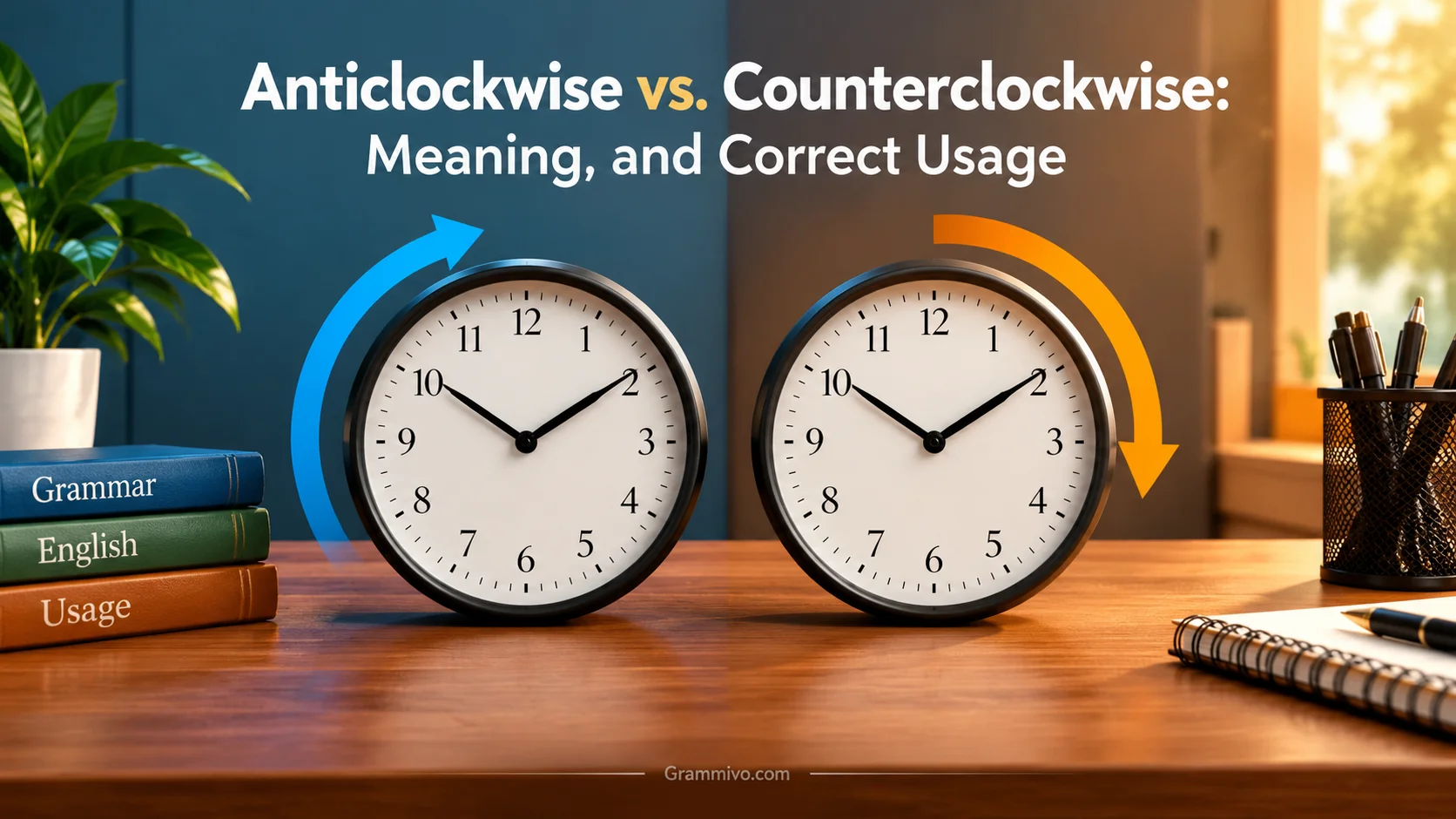
Anticlockwise vs. Counterclockwise: Meaning, and Correct Usage

Anticlockwise vs. Counterclockwise

Have you ever wondered whether to write anticlockwise or counterclockwise? Both words describe the same direction of rotation, yet writers often wonder which spelling is correct. The answer mainly depends on where you live and which variety of English you use. In British English, anticlockwise is the preferred term. In American English, counterclockwise is the … Read more

A Unique vs. An Unique: Which Is Correct?

A Unique vs. An Unique

Have you ever wondered whether to write “a unique experience” or “an unique experience”? You’re not alone. Many English speakers struggle with this choice because unique begins with the vowel letter u. At first glance, “an unique” might seem correct. However, English grammar doesn’t choose between a and an based on spelling alone. The sound … Read more

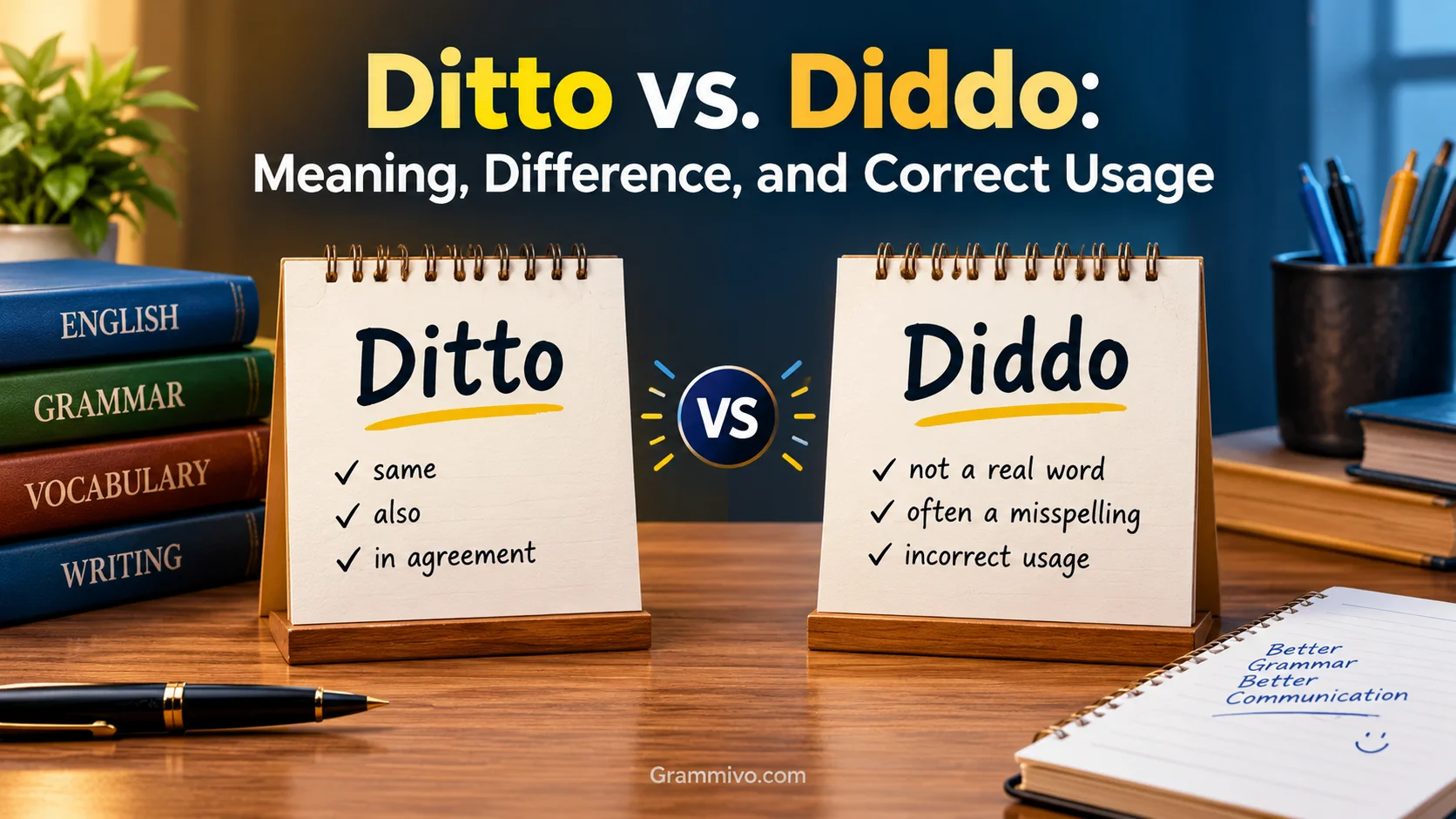
Ditto vs. Diddo: Meaning, Difference, and Correct Usage

Ditto vs. Diddo

Have you ever written diddo when you meant ditto? These two spellings look similar, but only one is the standard English word for expressing agreement or referring to something already mentioned. The confusion often appears in text messages, social media comments, and everyday conversations. The correct spelling is ditto, with two t’s. It means “the … Read more

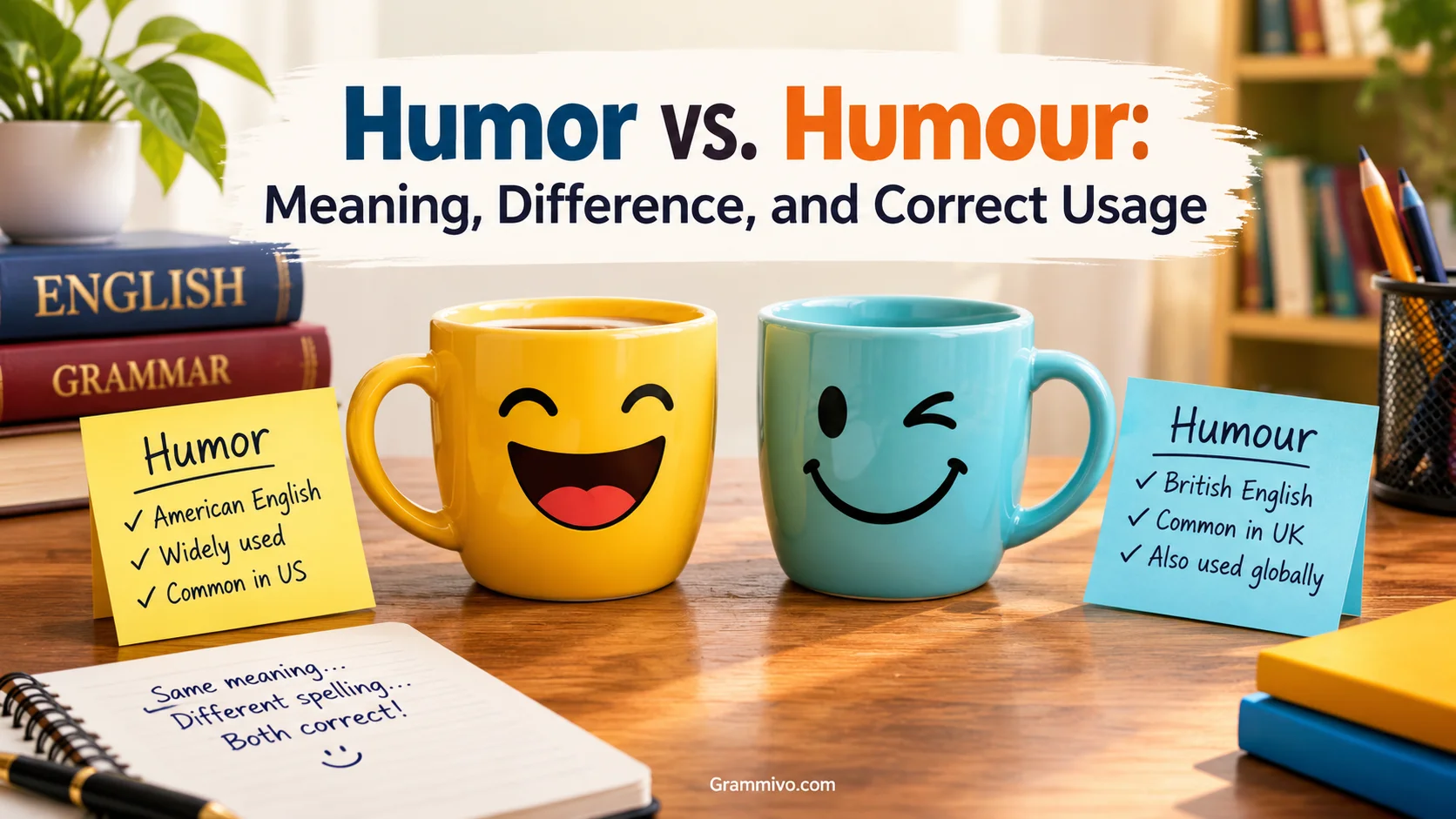
Humor vs. Humour: Meaning, Difference, and Correct Usage

Humor vs. Humour

Have you ever wondered whether to write humor or humour? Both spellings appear in books, articles, conversations, and social media posts. Although they look slightly different, they share the same meaning and pronunciation in standard English. The main difference comes down to regional spelling conventions. American English uses humor, while British English uses humour. Both … Read more

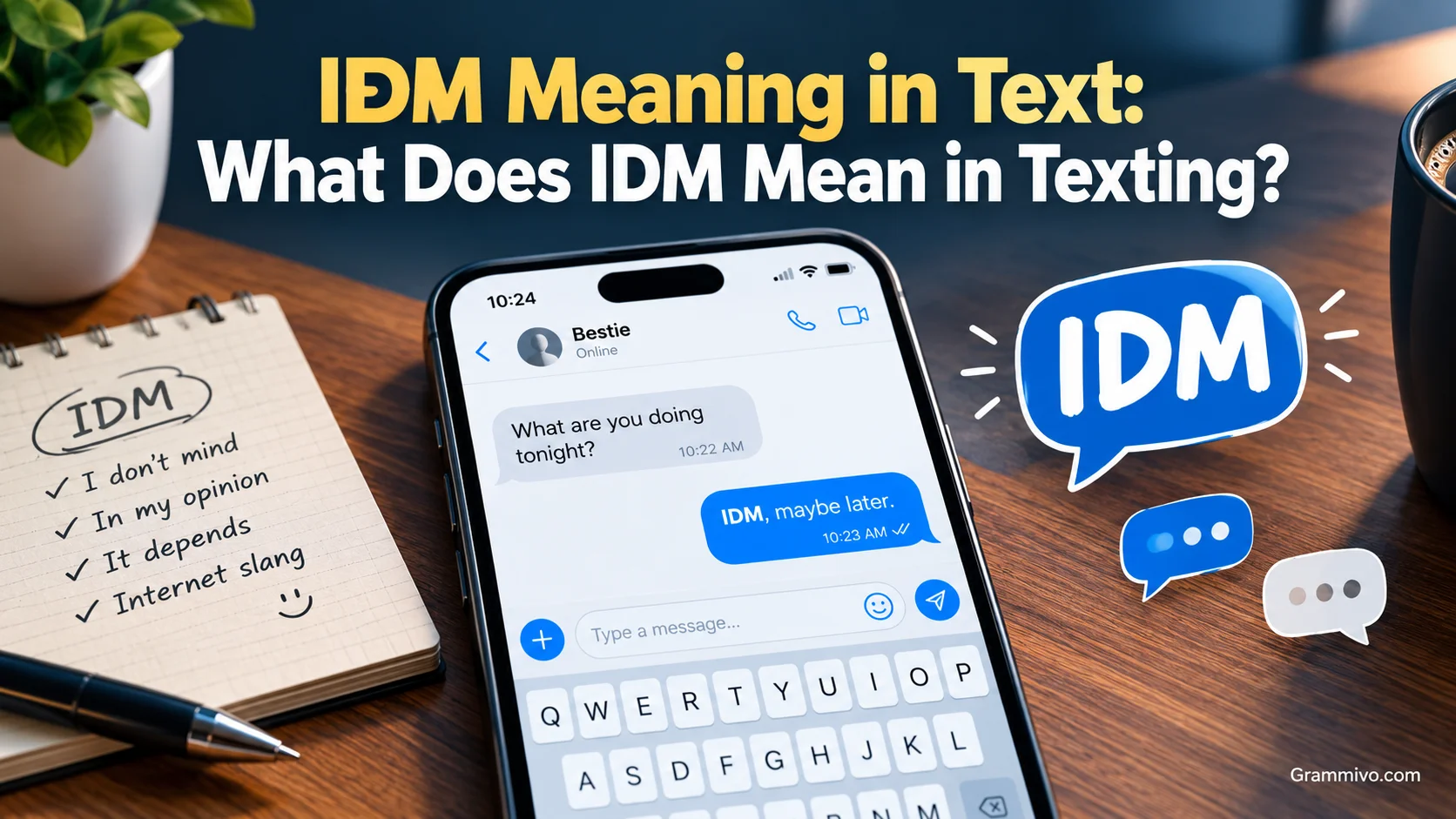
IDM Meaning in Text: What Does IDM Mean in Texting?

IDM Meaning in Text

Have you ever received a text that says “IDM” and wondered what the other person meant? This short abbreviation appears in text messages, social media conversations, and online chats. Although it might look confusing at first, its meaning is usually simple once you understand the context. IDM most commonly means “I Don’t Mind” in texting. … Read more