
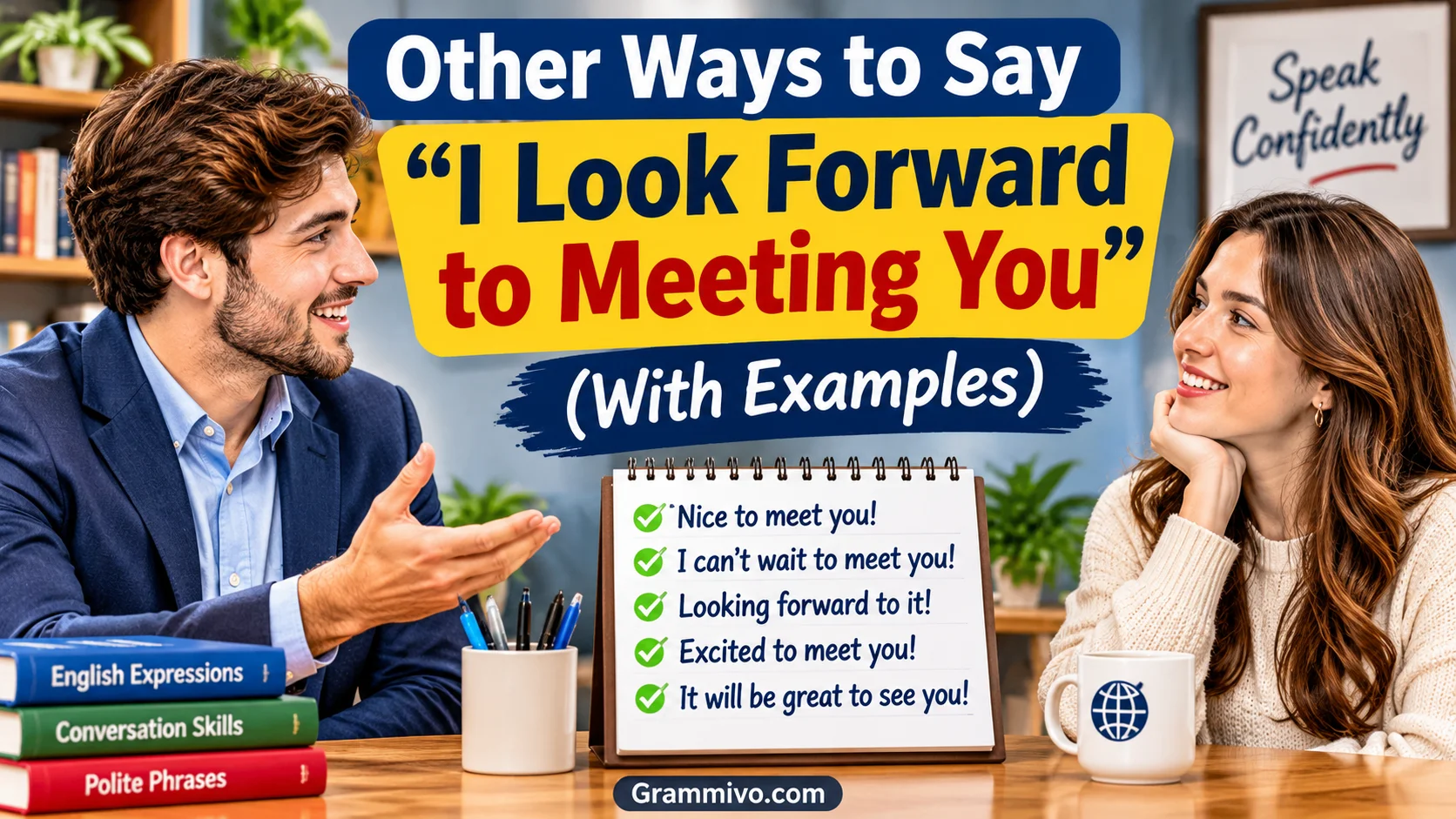
Whether you’re writing a professional email, confirming a business appointment, or arranging a personal get-together, “I look forward to meeting you” is a polite way to express anticipation. However, using the same phrase in every message can make your communication sound repetitive or overly formal.
Fortunately, American English offers several natural alternatives that convey the same enthusiasm while allowing you to adjust your tone. Some expressions work especially well in business correspondence, while others sound warmer, friendlier, or more conversational. In this guide, you’ll discover 15 useful ways to say “I look forward to meeting you,” understand their differences, and learn when each expression fits best.
Quick Answer:
Here are some natural alternatives you can use in professional emails, business messages, and everyday conversations:
- I’m excited to meet you. – A friendly and enthusiastic alternative.
- I look forward to our meeting. – A polished choice for professional appointments.
- I’m looking forward to meeting you. – A natural variation of the original expression.
- It’ll be great to meet you. – Warm and conversational.
- I’m eager to meet you. – Expresses strong anticipation.
- I look forward to connecting with you. – Useful for professional networking.
- I’m glad we’ll have the chance to meet. – Polite and personable.
- I can’t wait to meet you. – Casual and enthusiastic.
These expressions aren’t interchangeable in every situation. For example, connecting with you can suggest a broader professional interaction, while meeting you specifically refers to meeting someone.
Comparison Overview
The following table highlights the most useful alternatives and their appropriate tones.
| Alternative | Best Used For | Tone |
| I’m excited to meet you. | Personal and professional messages | Enthusiastic |
| I look forward to our meeting. | Business emails | Professional |
| I’m looking forward to meeting you. | General communication | Polite |
| It’ll be great to meet you. | Friendly introductions | Warm |
| I’m eager to meet you. | Important introductions | Enthusiastic |
| I look forward to connecting with you. | Networking | Professional |
| I’m glad we’ll have the chance to meet. | Formal and personal messages | Courteous |
| I can’t wait to meet you. | Friends and informal conversations | Casual |
| I’m pleased we’ll be meeting soon. | Business correspondence | Formal |
| It’ll be nice to finally meet you. | First-time introductions | Friendly |
What Does “I Look Forward to Meeting You” Mean?
The expression “I look forward to meeting you” communicates that you’re pleased about an upcoming introduction or appointment. It tells the other person that you anticipate meeting them positively.
Grammatically, look forward to is a phrasal verb followed by a noun or an -ing verb form. In this expression, meeting functions as a gerund after the preposition to.
For example:
- I look forward to meeting you at the conference next week.
- We look forward to meeting your team during the visit.
The expression is polite, respectful, and relatively professional. It doesn’t necessarily communicate excitement or strong emotion. Instead, it expresses positive anticipation in a measured way.
Is “I Look Forward to Meeting You” Appropriate in Different Situations?
Yes. The expression works in several settings, although its level of formality can make certain alternatives more suitable.
Workplace communication: It’s appropriate when arranging interviews, introducing yourself to colleagues, or confirming appointments.
Professional emails: It’s a particularly useful closing sentence when you’ve arranged a meeting with a client, recruiter, business partner, or potential employer.
Everyday conversations: You can use it when meeting someone for the first time. However, more relaxed expressions may sound friendlier.
Formal correspondence: The expression fits professional letters and official communications because it conveys courtesy without sounding overly personal.
Personal messages: It works when arranging a first meeting with someone you’ve been communicating with online. For close friends, however, a more enthusiastic phrase may feel natural.
Why Choose Different Ways to Say “I Look Forward to Meeting You”?
Choosing a different expression can make your communication more effective.
- Match your tone: A business client and a close friend may appreciate different wording.
- Sound more personal: Expressing genuine excitement can make an introduction feel warmer.
- Avoid repetition: Alternative expressions help keep emails and messages from sounding formulaic.
- Communicate your intentions: Some phrases emphasize excitement, while others highlight professional collaboration.
- Build better connections: Thoughtful wording can make the other person feel welcome and appreciated.
Final List of Alternatives:
- I’m Excited to Meet You
- I Look Forward to Our Meeting
- I’m Looking Forward to Meeting You
- It’ll Be Great to Meet You
- I’m Eager to Meet You
- I’m Glad We’ll Have the Chance to Meet
- I Look Forward to Connecting With You
- I’m Pleased We’ll Be Meeting Soon
- I Appreciate the Opportunity to Meet You
- I Welcome the Opportunity to Meet With You
- I Can’t Wait to Meet You
- It’ll Be Nice to Finally Meet You
- I’m Happy We’ll Be Meeting
- Looking Forward to Putting a Face to the Name
- It Will Be a Pleasure to Meet You
1. I’m Excited to Meet You
Meaning and Usage: This expression communicates genuine enthusiasm about meeting someone. It’s more emotionally expressive than the original phrase and works particularly well when you want your message to sound welcoming. You can use it in professional introductions when the relationship allows a friendly tone.
Examples:
- I’m excited to meet you and discuss the new project.
- Our team is excited to meet you next Tuesday.
- I’m excited to finally put a face to the name.
Best Use For: First-time introductions, friendly business emails, networking, and personal messages.
Tone: Warm, enthusiastic, and friendly.
2. I Look Forward to Our Meeting
Meaning and Usage: This is a polished alternative that focuses on the scheduled meeting rather than the act of meeting someone for the first time. It’s particularly suitable for business appointments, interviews, consultations, and formal discussions. Unlike the original, it also works when you’ve already met the person.
Examples:
- I look forward to our meeting on Thursday.
- Thank you for scheduling the consultation. I look forward to our meeting.
- I look forward to our discussion about the upcoming changes.
Best Use For: Business emails, professional appointments, interviews, and scheduled discussions.
Tone: Professional, courteous, and formal.
3. I’m Looking Forward to Meeting You
Meaning and Usage: This is a slightly different grammatical form of the original expression. The present progressive construction makes it sound conversational and natural. It communicates the same positive anticipation without changing the central meaning. It’s an excellent choice when you want polite wording that doesn’t feel stiff.
Examples:
- I’m looking forward to meeting you at the office.
- We’re looking forward to meeting everyone on the team.
- Thanks for confirming the appointment. I’m looking forward to meeting you.
Best Use For: Professional emails, introductions, appointment confirmations, and everyday communication.
Tone: Polite, natural, and friendly.
4. It’ll Be Great to Meet You
Meaning and Usage: This expression communicates that you expect the meeting to be a positive experience. It’s less formal than the original and sounds particularly natural in conversational messages. It works well when you want to express enthusiasm without sounding overly emotional or using traditional business language.
Examples:
- It’ll be great to meet you in person next week.
- It’ll be great to meet you and hear more about your experience.
- Thanks for arranging everything. It’ll be great to meet you.
Best Use For: Casual professional emails, friendly introductions, and social arrangements.
Tone: Warm, relaxed, and positive.
5. I’m Eager to Meet You
Meaning and Usage: This expression communicates strong anticipation and interest in meeting someone. The word eager makes your enthusiasm more noticeable than the original phrase. It can work in professional situations, especially when you’re excited about an opportunity or an important introduction. However, it may sound overly enthusiastic in routine business correspondence.
Examples:
- I’m eager to meet you and learn about your company’s goals.
- We’re eager to meet the new members of our department.
- After our conversations, I’m eager to meet you in person.
Best Use For: Important introductions, professional opportunities, and enthusiastic personal communication.
Tone: Enthusiastic, confident, and positive.
6. I’m Glad We’ll Have the Chance to Meet
Meaning and Usage: This phrase expresses appreciation for an upcoming opportunity to meet someone. Rather than simply anticipating the meeting, it emphasizes that you’re pleased the opportunity exists. It sounds considerate and personable, making it useful when arranging an introduction or meeting after previous correspondence.
Examples:
- I’m glad we’ll have the chance to meet during your visit.
- We’re glad we’ll have the chance to discuss the proposal in person.
- It’s been great communicating with you, and I’m glad we’ll have the chance to meet.
Best Use For: Professional introductions, client communication, and polite personal messages.
Tone: Courteous, warm, and appreciative.
Professional and Formal Alternatives
These expressions are especially useful when communicating with clients, employers, colleagues, and business contacts.
7. I Look Forward to Connecting With You
Meaning and Usage: This expression emphasizes establishing or developing a connection rather than simply meeting face-to-face. It’s especially popular in professional networking and business communication. You can use it for an in-person meeting, phone call, or virtual conversation. However, it doesn’t always mean a physical meeting.
Examples:
- I look forward to connecting with you about the position.
- Thank you for reaching out. I look forward to connecting.
- We look forward to connecting with your leadership team.
Best Use For: Networking messages, LinkedIn communication, professional introductions, and virtual meetings.
Tone: Professional, approachable, and collaborative.
8. I’m Pleased We’ll Be Meeting Soon
Meaning and Usage: This expression communicates polite satisfaction about an upcoming meeting. It’s more formal than saying you’re excited to meet someone. The wording is particularly suitable for professional correspondence when you want to maintain a respectful and composed tone.
Examples:
- I’m pleased we’ll be meeting soon to discuss the partnership.
- We’re pleased to have the opportunity to meet with your representatives.
- I’m pleased we’ll be meeting next month to review the proposal.
Best Use For: Formal business emails, executive communication, and official correspondence.
Tone: Formal, respectful, and composed.
9. I Appreciate the Opportunity to Meet You
Meaning and Usage: This phrase emphasizes gratitude rather than anticipation alone. It works particularly well when someone has arranged an introduction, offered an interview, or provided an opportunity to discuss a professional matter. It’s not an exact synonym because appreciation is its central message.
Examples:
- I appreciate the opportunity to meet you and discuss the position.
- Thank you for arranging the introduction. I appreciate the opportunity to meet.
- I appreciate the opportunity to speak with your team in person.
Best Use For: Job interviews, professional introductions, business meetings, and formal communication.
Tone: Respectful, grateful, and professional.
10. I Welcome the Opportunity to Meet With You
Meaning and Usage: This expression communicates that you’re receptive to an upcoming meeting and consider it worthwhile. It’s more formal and deliberate than the original. It works particularly well when responding to an invitation or proposing a professional discussion. Unlike look forward to, it emphasizes willingness rather than anticipation.
Examples:
- I welcome the opportunity to meet with you and discuss the proposal.
- We welcome the opportunity to meet your representatives.
- I would welcome the opportunity to meet and explore possible collaboration.
Best Use For: Formal business correspondence, partnership discussions, and professional proposals.
Tone: Formal, respectful, and confident.
Casual and Friendly Alternatives
These expressions are better suited to relaxed conversations, social introductions, and messages with a personal touch.
11. I Can’t Wait to Meet You
Meaning and Usage: This is a more enthusiastic and informal way to express anticipation. It communicates excitement about an upcoming introduction, often with a stronger emotional emphasis than the original. Although it can work with friendly professional contacts, it may feel too casual for formal business emails.
Examples:
- I can’t wait to meet you when you visit New York.
- Everyone is excited, and I can’t wait to meet you.
- We’ve talked so much already. I can’t wait to meet you in person.
Best Use For: Friends, personal introductions, social plans, and informal messages.
Tone: Casual, enthusiastic, and cheerful.
12. It’ll Be Nice to Finally Meet You
Meaning and Usage: This expression is particularly appropriate when you’ve communicated with someone before but haven’t met face-to-face. The word finally highlights that the meeting has been anticipated for some time. It sounds natural and friendly, although you should avoid it when there’s no established history of communication.
Examples:
- We’ve exchanged several emails, so it’ll be nice to finally meet you.
- It’ll be nice to finally meet you after all our video calls.
- I’ve heard so much about you. It’ll be nice to finally meet you.
Best Use For: Online acquaintances, remote colleagues, long-distance friends, and first in-person meetings.
Tone: Friendly, warm, and conversational.
13. I’m Happy We’ll Be Meeting
Meaning and Usage: This expression communicates satisfaction about an upcoming meeting without sounding overly formal. It offers a gentle alternative when you want to express positive feelings in a straightforward way. It’s suitable for both personal and professional messages, depending on the relationship.
Examples:
- I’m happy we’ll be meeting during the conference.
- We’re happy we’ll be meeting your new team.
- I’m happy we’ll be meeting in person after all this time.
Best Use For: Friendly professional communication, personal introductions, and informal business messages.
Tone: Positive, relaxed, and approachable.
14. Looking Forward to Putting a Face to the Name
Meaning and Usage: This familiar expression means you’re looking forward to meeting someone you’ve heard about or communicated with but haven’t seen in person. It’s not a direct replacement in every situation because it specifically emphasizes making a personal introduction. It works especially well in relaxed professional communication.
Examples:
- We’ve exchanged several messages, and I’m looking forward to putting a face to the name.
- I’ve heard great things about your work. It’ll be nice to put a face to the name.
- After working together remotely, I’m looking forward to putting a face to the name.
Best Use For: Remote work introductions, networking events, and informal business emails.
Tone: Friendly, conversational, and personable.
15. It Will Be a Pleasure to Meet You
Meaning and Usage: This expression communicates courtesy and genuine willingness to meet someone. It’s more formal and traditional than the original. It works particularly well when addressing someone you don’t know personally, especially in professional or official correspondence. It emphasizes the expected pleasure of the meeting rather than anticipation alone.
Examples:
- It will be a pleasure to meet you during your upcoming visit.
- It would be a pleasure to meet you and discuss your recommendations.
- It will be a pleasure to meet your colleagues at the event.
Best Use For: Formal introductions, business correspondence, professional invitations, and respectful communication.
Tone: Formal, courteous, and gracious.
How to Replace “I Look Forward to Meeting You” in a Sentence
Choosing an alternative becomes easier when you see how it works in an actual message. Here are five practical transformations.
Original: I look forward to meeting you at the conference next month.
Alternative: I’m excited to meet you at the conference next month.
Why It Works: The alternative communicates more enthusiasm while preserving the original message.
Original: I look forward to meeting you to discuss the partnership.
Alternative: I look forward to our meeting to discuss the partnership.
Why It Works: This version sounds polished and focuses on the scheduled business discussion.
Original: I look forward to meeting you after our online conversations.
Alternative: It’ll be nice to finally meet you after our online conversations.
Why It Works: The replacement highlights the transition from online communication to an in-person introduction.
Original: I look forward to meeting you and learning about your experience.
Alternative: I’m eager to meet you and learn about your experience.
Why It Works: This version adds enthusiasm and emphasizes your interest in the other person’s background.
Original: I look forward to meeting you next week.
Alternative: It will be a pleasure to meet you next week.
Why It Works: The alternative creates a more formal and courteous impression.
Which Alternatives Work Best in Professional Emails?
Professional emails usually benefit from clear, courteous language. Your choice should reflect the relationship and purpose of the meeting.
Here are some useful options:
- For a job interview: “I look forward to speaking with you about the position.”
- For a new client: “I look forward to connecting with you and discussing your needs.”
- For a business appointment: “I look forward to our meeting on Friday.”
- For a potential business partner: “I welcome the opportunity to meet and explore potential collaboration.”
- For a new colleague: “I’m looking forward to meeting you and working together.”
One important distinction: use speaking with you when the upcoming interaction is a phone or video conversation rather than an in-person introduction. It keeps your message accurate.
How to Choose the Right Alternative
Not every expression fits every relationship. Consider these practical tips before choosing your wording.
Consider your relationship: Use warmer language with someone you’ve already developed a friendly connection with. Choose more measured wording for unfamiliar business contacts.
Think about the occasion: A job interview calls for a different tone than meeting a friend for dinner.
Match your enthusiasm: I’m excited to meet you communicates stronger feelings than I’m pleased we’ll be meeting soon.
Consider the communication channel: Professional emails often benefit from complete, polished sentences. Text messages can sound more relaxed.
Preserve your intended meaning: If you mean an actual in-person meeting, avoid alternatives like connecting unless the context makes your intention clear.
Read your message aloud: If the expression sounds unnatural when spoken, consider a simpler alternative.
Frequently Asked Questions
What Is Another Professional Way to Say “I Look Forward to Meeting You”?
“I look forward to our meeting” is one of the strongest professional alternatives. It sounds polished, respectful, and appropriate for scheduled appointments. You can also use “I look forward to connecting with you” when discussing networking, collaboration, or a virtual conversation.
Is “I’m Excited to Meet You” Professional?
Yes. “I’m excited to meet you” can sound professional when the situation allows a friendly tone. It’s particularly suitable for introductions, welcoming new colleagues, and communicating with potential collaborators. However, a more measured expression may work better in formal correspondence.
How Do You End an Email Before Meeting Someone for the First Time?
You can close with a sentence that expresses positive anticipation. For example, “I look forward to meeting you next Tuesday” or “It’ll be great to meet you in person.” Choose wording that matches your relationship with the recipient and the formality of the email.
Is “Looking Forward to Meeting You” Grammatically Correct?
Yes. “Looking forward to meeting you” is a natural expression, especially in informal email closings. However, it’s technically a sentence fragment when used without a subject and finite verb. For a complete sentence, write “I’m looking forward to meeting you.”
Can I Say “I Can’t Wait to Meet You” in a Business Email?
Yes, but consider your relationship with the recipient. It works well when communicating with friendly colleagues or professional contacts you’ve already spoken with. For a formal introduction or an unfamiliar client, “I look forward to meeting you” is generally more measured.
Conclusion:
Finding other ways to say “I look forward to meeting you” helps you communicate with greater confidence and personality. Whether you’re arranging a business appointment, introducing yourself to a colleague, or making personal plans, the right expression can make your message feel more natural. Choose professional alternatives when communicating with clients and employers, and use warmer expressions when speaking with friends or familiar contacts.
