
Have you ever wondered whether to write spoilt or spoiled? Both spellings appear in English, and you might see them used in books, newspapers, conversations, and everyday writing. However, choosing the right form can sometimes feel confusing.
The good news is that both spoilt and spoiled are correct. They share the same basic meaning and come from the verb spoil. The main difference involves regional spelling preferences and how people use them in different contexts.
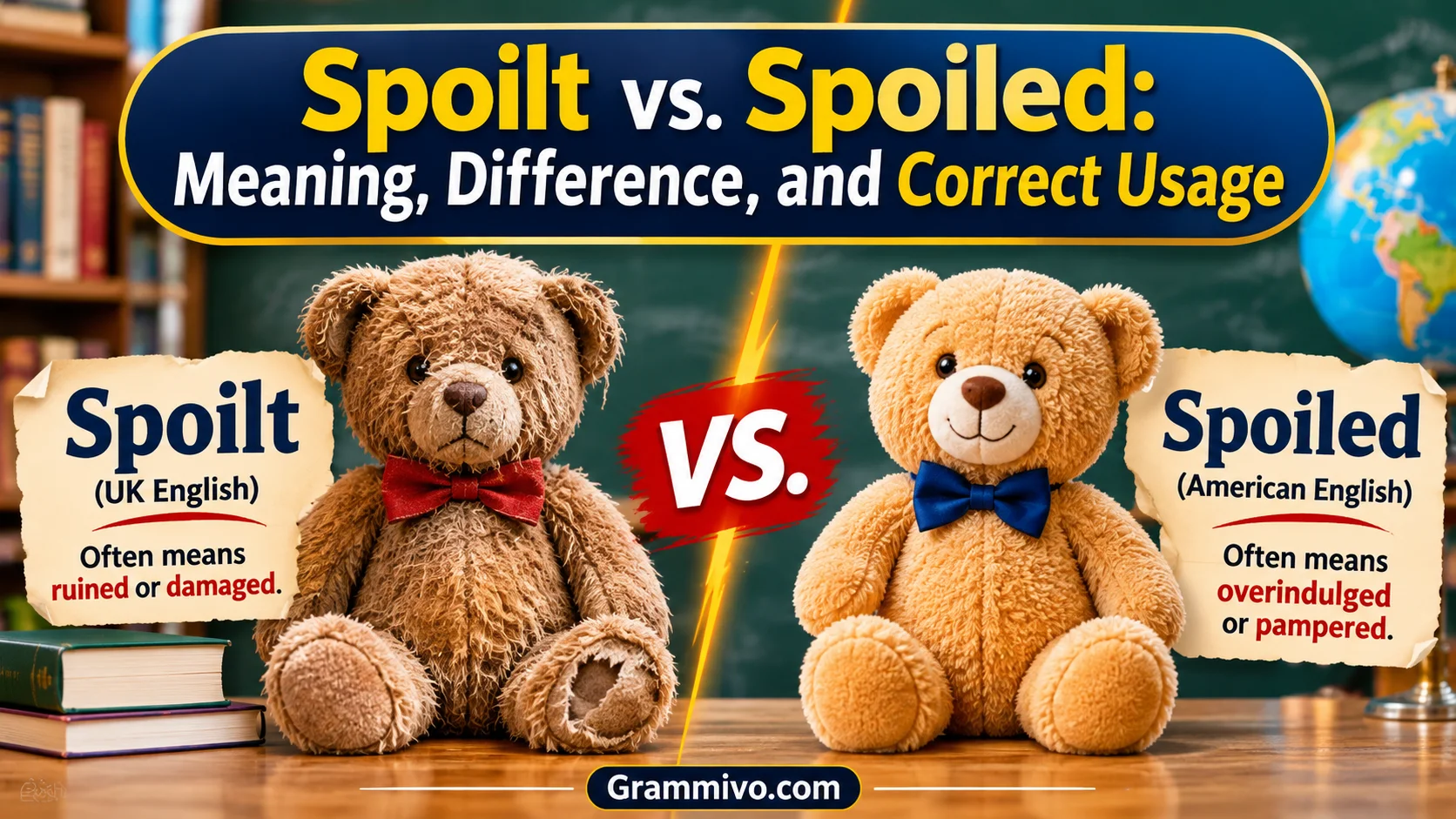
In American English, spoiled is the standard and more common spelling. British English accepts both forms, although spoilt appears frequently in everyday expressions. For example, you might describe a child as spoilt or say that some milk has spoiled.
Quick Answer:
Both spoilt and spoiled are correct past-tense and past-participle forms of the verb spoil. They can also function as adjectives.
- Spoiled: The preferred spelling in American English. It is also correct in British English.
- Spoilt: A common alternative in British English and less common in American English.
- Meaning: Both words can describe something damaged, ruined, excessively indulged, or no longer suitable for use.
Examples:
- American English: The hot weather spoiled the food.
- British English: The hot weather spoilt the food.
- Both varieties: Her parents spoiled her with expensive gifts.
If you’re writing for an American audience, choose spoiled. For British audiences, either spelling can work, depending on the context and your preferred style.
Comparison Overview
Although spoilt and spoiled look different, they share the same basic meaning. Both come from the verb spoil, which can describe damaging something, ruining an experience, or treating someone with excessive kindness or generosity.
The following table highlights their main similarities and differences.
| Comparison | Spoilt | Spoiled |
| Base verb | Spoil | Spoil |
| Part of speech | Verb and adjective | Verb and adjective |
| Past tense | Yes | Yes |
| Past participle | Yes | Yes |
| Adjective | Yes | Yes |
| American English | Less common | Preferred |
| British English | Common | Common |
| Meaning | Damaged, ruined, or indulged | Damaged, ruined, or indulged |
| Pronunciation | /spɔɪlt/ | /spɔɪld/ |
The key distinction is regional preference rather than meaning. Neither spelling is inherently incorrect, and both communicate the same basic idea.
What Does Spoiled Mean?
Spoiled is the past-tense and past-participle form of the verb spoil. It also works as an adjective when describing something damaged, ruined, or excessively indulged.
In American English, this spelling is the usual choice. You’ll encounter it when people discuss food, children, experiences, relationships, and other situations.
For example, consider these sentences:
- The milk spoiled after sitting outside overnight.
- Her parents spoiled her with birthday presents.
- Heavy rain spoiled our outdoor picnic.
- The spoiled vegetables smelled terrible.
In each example, spoiled describes something that has experienced an undesirable change.
Spoiled as the Past Tense of Spoil
When you use spoiled as a past-tense verb, you’re describing an action that happened in the past.
The verb spoil follows a regular conjugation pattern in this form. You simply add -ed to the base verb.
Examples:
- The unexpected announcement spoiled the surprise.
- My little brother spoiled the ending of the movie.
- The storm spoiled our weekend plans.
- Leaving the groceries outside spoiled the meat.
Notice that spoiled describes an action that has already happened. It tells readers what someone or something ruined.
A useful grammatical point: The past tense doesn’t change according to the subject.
For example:
- She spoiled the surprise.
- They spoiled the surprise.
- The unexpected news spoiled the surprise.
The spelling remains spoiled in every sentence.
Spoiled as the Past Participle of Spoil
The word spoiled also functions as a past participle. You typically use it with auxiliary verbs such as has, have, had, and was.
Past participles help form perfect tenses and passive constructions.
Examples:
- The food has spoiled because nobody refrigerated it.
- My brother had spoiled the surprise before I arrived.
- The milk was spoiled by improper storage.
- Their vacation plans have been spoiled by bad weather.
Here, spoiled works with another verb to express an action or condition.
Compare these examples:
| Sentence | Grammatical use |
| She spoiled the surprise. | Simple past |
| She has spoiled the surprise. | Present perfect |
| She had spoiled the surprise. | Past perfect |
| The surprise was spoiled. | Passive construction |
These examples show how the same spelling can perform different grammatical roles.
Spoiled as an Adjective
Spoiled can also describe a person, food, or situation. As an adjective, it identifies a condition or characteristic rather than directly expressing an action.
When describing people, it often refers to someone who receives excessive attention, gifts, or special treatment. Such a person may expect others to satisfy their wishes.
When describing food, it usually means the food has deteriorated and may no longer be safe to eat.
Examples:
- The spoiled child refused to share his toys.
- We threw away the spoiled cheese.
- She grew tired of her spoiled brother’s behavior.
- The spoiled fruit attracted insects.
The meaning depends on the noun being described. A spoiled child has received excessive indulgence, while spoiled food has deteriorated.
Examples of Spoiled in Sentences
Here are additional examples showing how Americans commonly use spoiled in everyday writing.
- My grandmother spoiled us with homemade desserts.
- The broken refrigerator caused the meat to become spoiled.
- He spoiled the movie by revealing its ending.
- Their afternoon at the beach was spoiled by heavy rain.
- The spoiled child always demands attention.
- I accidentally spoiled the surprise party.
- These leftovers have spoiled because they weren’t stored properly.
- Her parents never spoiled her with unnecessary luxuries.
Each sentence uses spoiled naturally without changing its spelling.
What Does Spoilt Mean?
Spoilt is another accepted past-tense and past-participle form of the verb spoil. It can also function as an adjective.
This spelling is especially familiar in British English, where speakers commonly use it in everyday conversations and writing.
Its meaning doesn’t differ from spoiled. Both words can describe ruined food, damaged plans, or someone who receives excessive indulgence.
For example:
- The children were spoilt by their grandparents.
- The warm weather spoilt the fresh vegetables.
- He spoilt the surprise by arriving too early.
- Our afternoon was spoilt by unexpected rain.
In these sentences, spoilt performs the same grammatical job as spoiled.
Spoilt as the Past Tense of Spoil
You can use spoilt to describe an action completed in the past. It works just like spoiled, although British English speakers may prefer the shorter spelling.
Examples:
- The heavy rain spoilt our family picnic.
- She spoilt the ending by telling everyone what happened.
- The children spoilt the clean carpet with muddy shoes.
- His careless comment spoilt the entire conversation.
In each example, spoilt identifies something that happened previously.
You don’t need to change its spelling based on the subject.
- He spoilt the surprise.
- They spoilt the surprise.
- The unexpected news spoilt the surprise.
All three sentences are grammatically correct.
Spoilt as the Past Participle of Spoil
Just like spoiled, spoilt can function as a past participle. You can combine it with auxiliary verbs to form perfect tenses and passive constructions.
Examples:
- The food has spoilt in the refrigerator.
- She had spoilt the surprise before the guests arrived.
- The entire evening was spoilt by an argument.
- Our plans have been spoilt by the sudden cancellation.
These sentences demonstrate that spoilt works in the same grammatical structures as spoiled.
However, remember that British English accepts both spellings. You don’t have to use spoilt every time you write for a British audience.
Spoilt as an Adjective
As an adjective, spoilt describes someone or something that has been excessively indulged, damaged, or ruined.
It’s particularly common when describing children who receive too much attention or expect everything to go their way.
Examples:
- The spoilt child refused to listen to his teacher.
- Her grandparents had made her a little spoilt.
- The spoilt vegetables needed to be discarded.
- He behaved like a spoilt teenager during the argument.
The adjective can sound critical when applied to people. It often suggests that someone has developed unreasonable expectations because others regularly give in to their demands.
When describing food, however, it simply indicates deterioration.
Examples of Spoilt in Sentences
Here are several additional examples of spoilt in natural British English contexts.
- My cousins were spoilt with wonderful birthday presents.
- The unexpected snowfall spoilt our travel plans.
- She has never spoilt her children with expensive toys.
- The milk had spoilt before breakfast.
- His rude behavior spoilt an otherwise pleasant evening.
- The little boy sounded like a spoilt child.
- The entire holiday was spoilt by poor weather.
- The fresh fruit had spoilt in the heat.
These examples demonstrate how spoilt works across different situations.
Main Differences Between Spoilt and Spoiled
The most important distinction between spoilt and spoiled concerns spelling preferences. Their meanings and grammatical functions remain essentially identical.
However, several smaller differences are worth understanding.
Differences in Spelling
The clearest difference appears in their endings.
- Spoiled: Ends with the letters -ed.
- Spoilt: Ends with the letters -lt.
The verb spoil is unusual because it accepts two established forms for its simple past and past participle.
Many English verbs follow predictable patterns. For example, walk becomes walked, and clean becomes cleaned.
However, spoil has two accepted alternatives:
| Base verb | Past tense | Past participle |
| Spoil | Spoiled | Spoiled |
| Spoil | Spoilt | Spoilt |
Both forms are standard English. You can choose either one according to your audience and writing style.
Differences in Regional Usage
Regional preferences explain why you might encounter one spelling more frequently than the other.
American English
American writers generally prefer spoiled. This spelling appears in newspapers, school materials, business communication, and everyday writing.
For example:
- The spoiled milk smelled unpleasant.
- Her parents spoiled her with expensive gifts.
- The storm spoiled our weekend plans.
British English
British English accepts both spoilt and spoiled. The shorter form is particularly familiar in expressions such as spoilt child and spoilt for choice.
For example:
- The spoilt child wanted another toy.
- The rain spoilt our afternoon.
- We were spoilt for choice at the restaurant.
However, British writers also use spoiled regularly. Neither spelling is restricted to one variety of English.
Differences in Grammar
There isn’t a meaningful grammatical difference between these two spellings.
Both can function as:
- Simple past-tense verbs.
- Past participles.
- Adjectives.
Consider the following examples:
| Grammatical function | Spoiled | Spoilt |
| Past tense | She spoiled the surprise. | She spoilt the surprise. |
| Past participle | The food has spoiled. | The food has spoilt. |
| Adjective | He is a spoiled child. | He is a spoilt child. |
The grammatical structure stays the same. Only the spelling changes.
Differences in Meaning
Neither spelling carries a separate or additional meaning.
Both can communicate several related ideas depending on the context.
When describing people:
- Spoiled child
- Spoilt child
Both describe a child who receives excessive indulgence or expects special treatment.
When describing food:
- Spoiled milk
- Spoilt milk
Both describe milk that has deteriorated and is no longer suitable for normal consumption.
When describing experiences:
- The rain spoiled our picnic.
- The rain spoilt our picnic.
Both sentences explain that rain ruined an enjoyable outdoor activity.
The surrounding words determine the intended meaning, not the spelling.
Differences in Pronunciation
The two words have slightly different endings when spoken.
- Spoiled: /spɔɪld/
- Spoilt: /spɔɪlt/
Both begin with the same sound, which resembles the word boy. The difference appears at the end.
Spoiled finishes with a /d/ sound, while spoilt finishes with a /t/ sound.
This small pronunciation difference makes the two forms easy to distinguish during conversation.
Is Spoilt or Spoiled Correct in American English?
If you’re writing for an American audience, spoiled is generally the better choice.
American English strongly favors the regular-looking -ed ending. You’ll find this spelling in educational materials, newspapers, books, and everyday communication.
Although Americans can understand spoilt, it may look unfamiliar or distinctly British to some readers.
Why Americans Prefer Spoiled
American English generally favors spoiled because it follows the common spelling pattern for regular past-tense verbs.
The same preference appears with several other verbs:
- Learned instead of learnt.
- Burned instead of burnt.
- Spelled instead of spelt.
- Spoiled instead of spoilt.
These comparisons illustrate a broader spelling preference in American English.
However, don’t assume that every -t alternative is incorrect in the United States. Some alternative forms remain accepted, although their frequency varies.
For consistent American writing, spoiled is the safest option.
Examples of Spoiled in American English
Here are some natural examples you might encounter in American writing:
- The children spoiled their appetites with too much candy.
- I accidentally spoiled the ending of the television series.
- The hot weather spoiled the food.
- His parents spoiled him with expensive birthday gifts.
- Our vacation was spoiled by a delayed flight.
- The spoiled vegetables went straight into the trash.
These sentences demonstrate the preferred American spelling across different contexts.
Frequently Asked Questions:
Is Spoilt or Spoiled More Grammatically Correct?
Both spoilt and spoiled are grammatically correct. They are accepted past-tense and past-participle forms of the verb spoil. The main difference involves regional preference rather than grammatical accuracy.
Is Spoilt British or American English?
Spoilt is particularly common in British English. American English generally favors spoiled, although spoilt remains recognizable to American readers.
Is Spoiled British or American English?
Spoiled is the preferred form in American English. However, British English also accepts and regularly uses it. Therefore, the spelling isn’t exclusive to either variety.
Can Spoilt and Spoiled Be Used Interchangeably?
Yes, you can generally use them interchangeably without changing the meaning. Both forms work as past-tense verbs, past participles, and adjectives. However, consider your audience when choosing between them.
Is Spoilt a Proper Word in English?
Yes, spoilt is a standard English word. It’s an accepted alternative past-tense and past-participle form of spoil. You can also use it as an adjective.
Conclusion:
Choosing between spoilt and spoiled becomes easy once you understand their regional preferences. Both spellings are correct, share the same meaning, and perform the same grammatical functions. The main difference is how frequently people use them in different varieties of English. If you’re writing for an American audience, spoiled is the preferred spelling. It works naturally when describing damaged food, ruined experiences, or excessively indulged people.
