Inact or Enact: Which Spelling Is Correct?
Inact or Enact

Writers often confuse Inact and Enact because they sound and look similar, but their meaning and usage are different. In standard English, Enact is the correct, commonly used word, while Inact is not a standard modern English verb for these purposes.  People may search for Inact or Enact to avoid mistakes in professional, academic, and … Read more
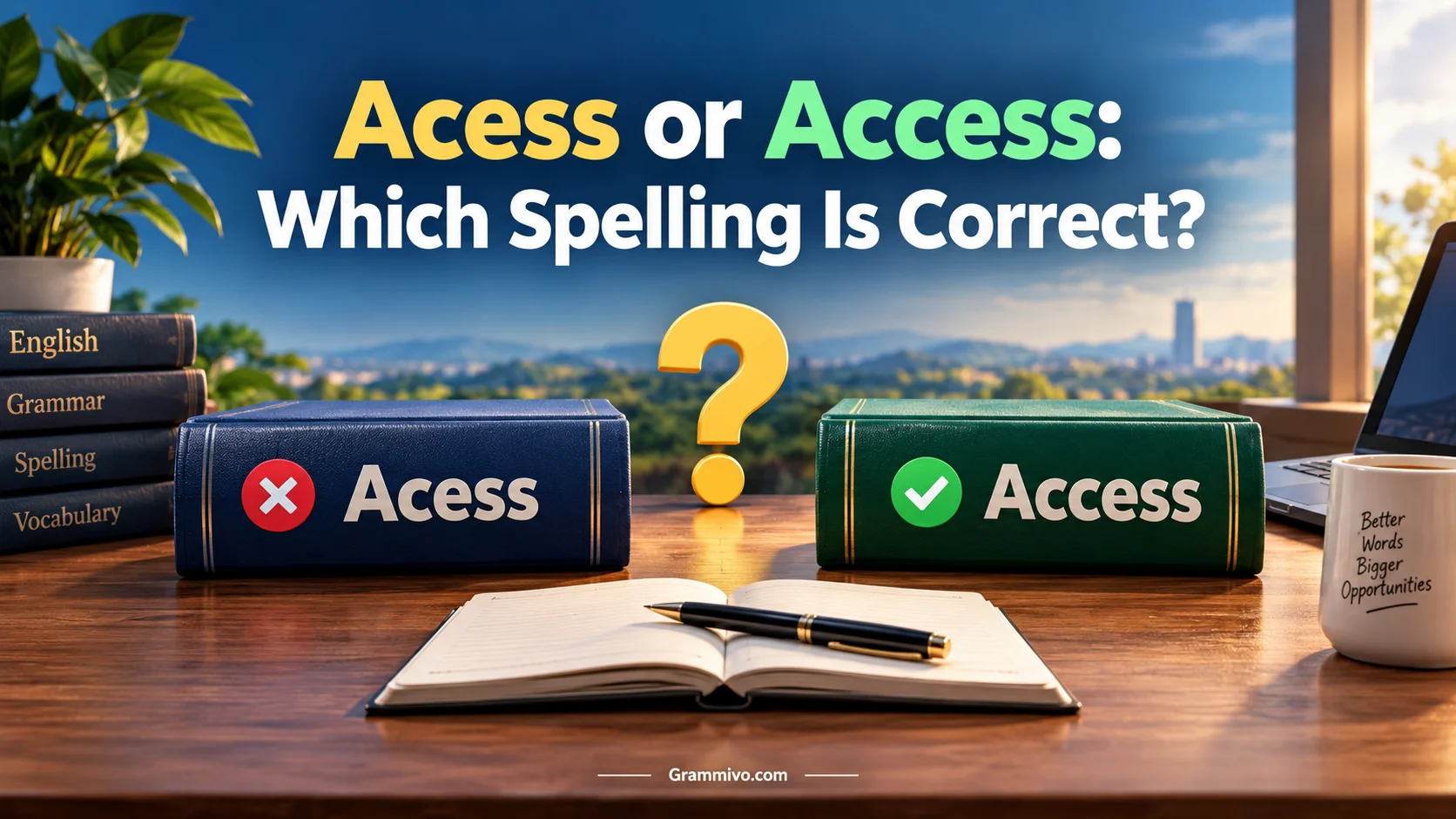
Acess or Access: Which Spelling Is Correct?

Acess or Access

When checking Acess or Access, remember that access is the correct spelling, while acess is an incorrect spelling caused by missing repeated letters. This common mistake often creates confusion because the two forms sounds nearly the same in pronunciation. The correct English word uses two c’s and two s’s, written as A-C-C-E-S-S.  This spelling pattern … Read more

Anyway vs. Anyways: Meaning, Differences, and Correct Usage

Anyway vs. Anyways

When you’re confused about Anyway vs. Anyways, this quick guide explains the correct words, their similar meaning, and their proper usage in English. Anyway and anyways can create uncertainty because both words have a similar sound and meaning.  They are often used interchangeably in casual speech and conversations, but their grammatical correctness differs. Anyway is … Read more

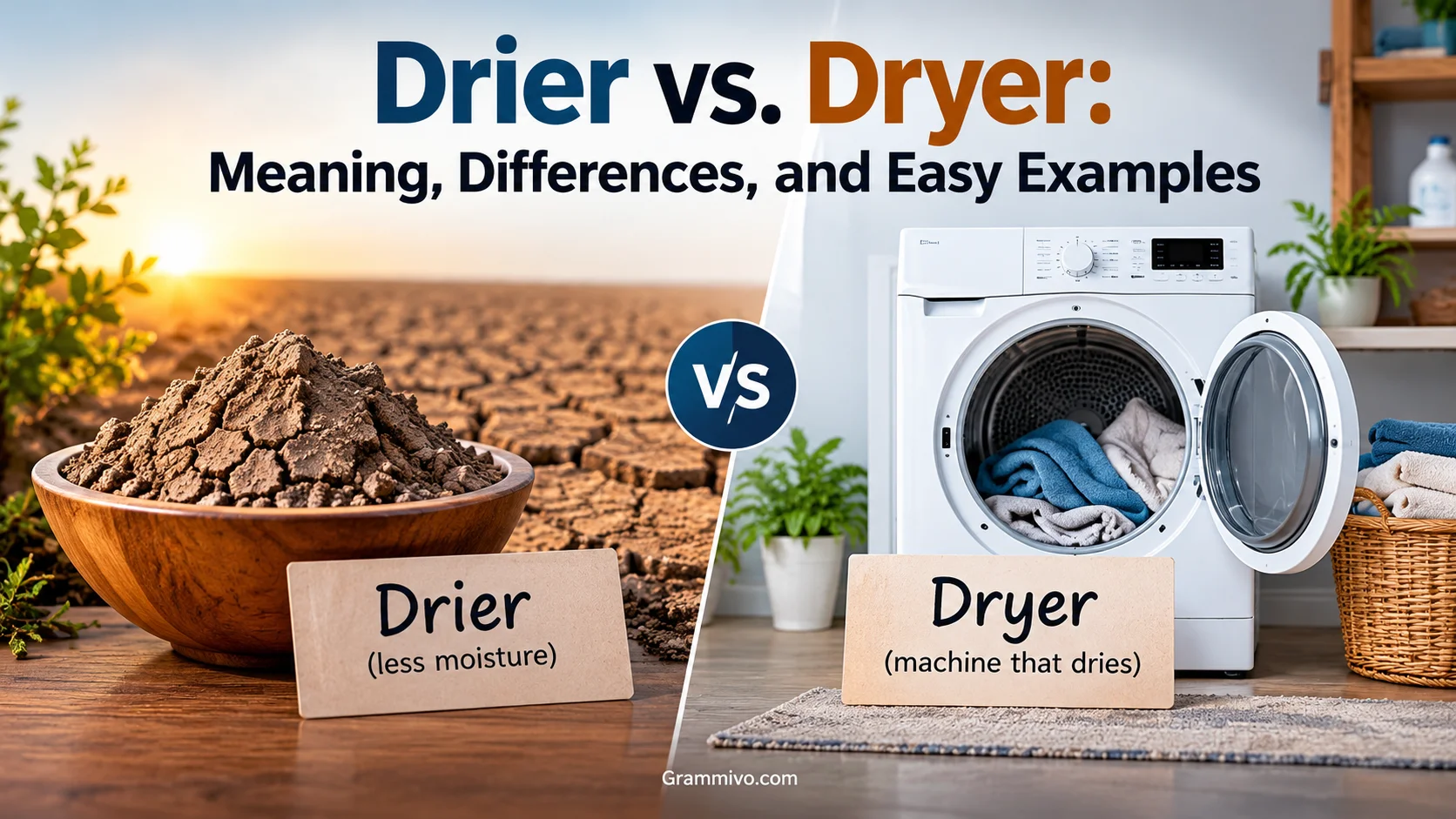
Drier vs. Dryer: Meaning, Differences, and Easy Examples

Drier vs. Dryer

Drier vs. Dryer can confuse students, learners, bloggers, and professional writers because the words look similar and mean different things. In English, drier usually means more dry, while dryer commonly means a machine, device, or appliance that dries something by removing moisture.  For example, drier weather describes less moist weather, while a hair dryer dries … Read more

Labeler vs. Labeller: Which Spelling Is Correct?

Labeler vs. Labeller

For writers, Labeler vs. Labeller depends on regional English conventions, with labeler used in American English and labeller in British English. Both are a real word with the same meaning, describing a person, machine, or device that applies labels to something.  The main spelling difference comes from different regional varieties. Labeler is the preferred spelling … Read more

Patient vs. Patience: Meaning, Differences, and Easy Examples

Patient vs. Patience

Patient and patience are a common word-choice mistake because these words look similar, sound similar, and express related ideas, but they are not interchangeable. When you write a sentence, their grammatical role makes the difference clear.  Patient can describe a person’s behavior when they are calm, tolerant, and able to wait without becoming upset. Patience, … Read more

Tomatoes vs. Tomatos: Which Spelling Is Correct?

Tomatoes vs. Tomatos

For Tomatoes vs. Tomatos, confused and unsure writers can quickly learn the correct spelling and avoid a common mistake. If you’ve ever paused mid-sentence, this common spelling question can make English writing feel tricky. Both forms look similar, but Tomatoes is correct, while Tomatos is the wrong form and incorrect in standard English spelling.  The … Read more

Inconsolable vs. Unconsolable: Meaning, Differences, and Correct Usage

Inconsolable vs. Unconsolable

Inconsolable vs. Unconsolable confuses writers because both forms look and sound similar, yet only one is standard English. The basic idea is easy to understand: someone who cannot be comforted after a painful event may be described as inconsolable.  This is the correct word, and it is a widely accepted, established adjective in formal English. … Read more

Minuscule vs. Miniscule: Which Spelling Is Correct?

Minuscule vs. Miniscule

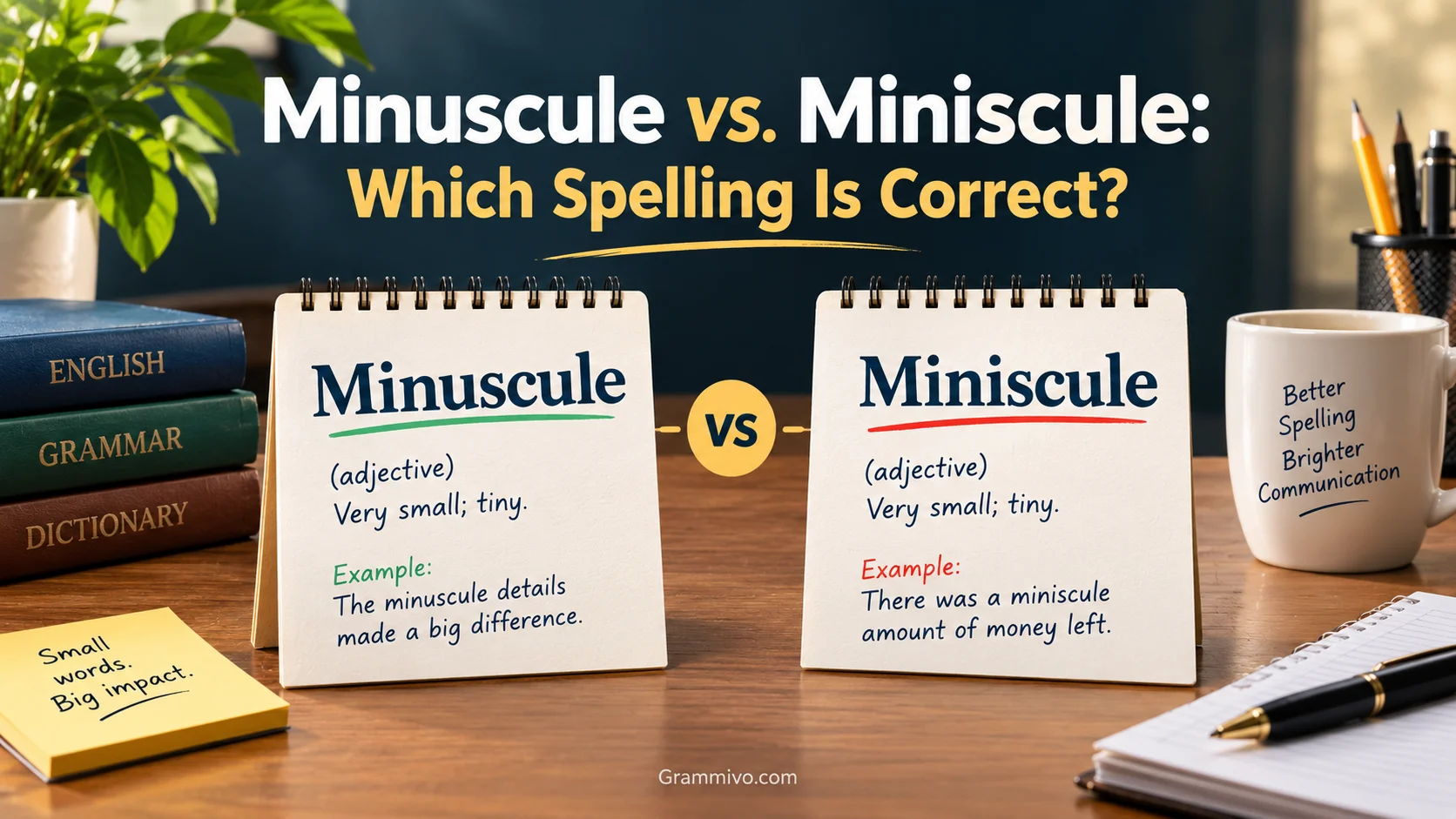
Minuscule vs. Miniscule often causes spelling confusion because minuscule sounds like mini, but only minuscule is the correct standard spelling. When typing the word, miniscule may seem natural because mini- is a familiar prefix in miniature, minibus, and miniskirt.  However, the incorrect version is a common misspelling, while minuscule is the standard form in English. … Read more