
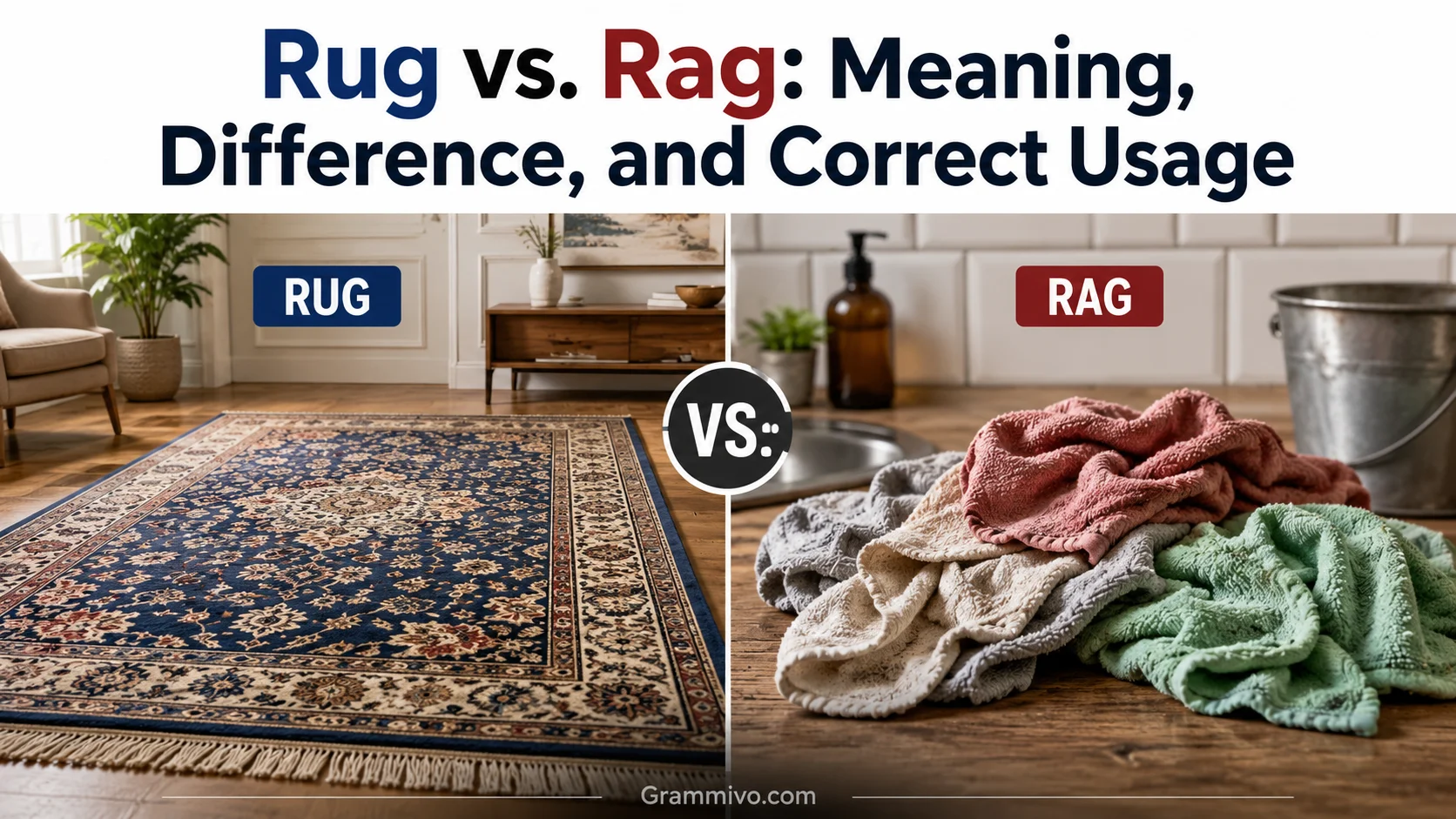
The English language contains many words that look and sound similar but have completely different meanings. Rug vs. rag is one such comparison. Although both words relate to fabric and household materials, they describe two very different things. Mixing them up can change the meaning of an entire sentence.
A rug is generally a piece of thick material designed to cover part of a floor. You might place one beneath your coffee table, beside your bed, or near your front door. A rag, on the other hand, is usually an old or unwanted piece of cloth that people use for cleaning, wiping, or polishing. The confusion often comes from their similar spelling and their connection to fabric. However, their purposes, appearances, and everyday uses are quite different.
Understanding the difference between rug and rag helps you choose the correct word in conversations, household descriptions, and written communication. This guide explains both terms, compares their meanings, explores common expressions, and provides practical examples to make the distinction easy to remember.
Quick Answer
Rug refers to a piece of thick fabric or another material used to cover part of a floor. It adds comfort, warmth, and decoration to a room.
Rag refers to an old, worn, or unwanted piece of cloth. People commonly use rags for cleaning, wiping spills, dusting, and polishing surfaces.
Here are two simple examples:
- Rug: We bought a beautiful wool rug for the living room.
- Rag: She used an old cotton rag to clean the kitchen counter.
The easiest way to remember the difference: A rug goes on the floor as a covering while a rag usually helps you clean things.
Comparison Overview
Although rugs and rags can both contain textile fibers, their functions and characteristics differ considerably. A rug is generally a finished household furnishing while a rag is often a leftover or repurposed piece of fabric.
The following table highlights their main differences.
| Comparison Point | Rug | Rag |
| Meaning | A floor covering | An old or unwanted piece of cloth |
| Primary purpose | Decoration, comfort, and floor protection | Cleaning, wiping, and polishing |
| Common material | Wool, cotton, nylon, polyester, and other fibers | Cotton, linen, microfiber, and fabric scraps |
| Appearance | Usually finished, shaped, and designed | Often worn, torn, or irregular |
| Typical location | Living rooms, bedrooms, hallways, and offices | Kitchens, garages, workshops, and cleaning areas |
| Texture | Often thick, woven, tufted, or plush | Varies depending on the fabric |
| Size | Available in various floor-covering sizes | Usually small enough to hold or handle |
| Maintenance | Vacuuming and occasional washing | Washing, reusing, or discarding |
| Example | A patterned rug under a dining table | A rag for wiping spilled water |
One important distinction is that a rug doesn’t have to be expensive or decorative. Some rugs serve practical purposes, such as preventing slips or protecting floors. Similarly, a rag doesn’t always have to be dirty or damaged. Some people cut clean, unused fabric into reusable cleaning cloths.
What Does Rug Mean?
A rug is a piece of thick material designed to cover part of a floor. It can provide warmth, improve comfort, protect flooring, and make an interior space look more attractive.
Rugs come in different shapes, sizes, colors, patterns, and materials. Some feature traditional designs and detailed craftsmanship while others have simple, modern appearances.
For example, a homeowner might place a large area rug beneath a sofa and coffee table to create a comfortable seating area. Someone else might use a small rug beside their bed to keep their feet warm when getting up.
The word rug functions primarily as a noun.
Example: The new rug makes the living room feel warmer and more inviting.
Definition of Rug
According to its everyday meaning, a rug is a textile floor covering that usually covers a limited section of a room rather than an entire floor.
Manufacturers make rugs using different techniques, including weaving, tufting, knotting, and machine production. Their construction affects their appearance, durability, thickness, and price.
Common rug materials include:
- Wool: A natural fiber valued for warmth, softness, and durability.
- Cotton: A lightweight, comfortable material that often works well in casual spaces.
- Nylon: A synthetic fiber known for strength and resistance to wear.
- Polyester: A synthetic material often used for its softness and color retention.
- Jute: A natural plant fiber that creates a textured, earthy appearance.
- Polypropylene: A synthetic fiber commonly used in affordable and outdoor-friendly rugs.
Rugs also differ from carpets in their typical coverage. A rug usually covers a defined section of flooring while wall-to-wall carpet extends across most or all of a room’s floor.
Common Uses of Rug
Rugs serve several purposes beyond simply covering an empty floor. Their practical and decorative benefits make them common household items.
Home decoration
A rug can bring together different colors and furniture pieces. For example, a neutral sofa and wooden coffee table may look more coordinated with a patterned rug underneath.
Comfort and warmth
Hard flooring can feel cold under bare feet. A soft rug provides a more comfortable surface in bedrooms, living rooms, and other frequently used spaces.
Floor protection
Rugs help protect hardwood, laminate, tile, and other flooring materials from everyday wear. They can reduce direct contact with furniture and help catch dirt near entrances.
Noise reduction
A rug can absorb some sound within a room. This makes it useful in spaces with hard surfaces that produce echoes or footsteps.
Defining different areas
In open-plan homes, rugs help separate functional spaces without installing walls or permanent dividers. For instance, one rug can identify the living area while another marks the dining space.
Examples of Rug in Sentences
Understanding a word becomes easier when you see how people use it naturally.
Here are several examples of rug in everyday sentences:
- We placed a colorful rug beneath the coffee table.
- The bedroom rug feels soft against my bare feet.
- Please remove your shoes before walking on the white rug.
- My grandmother gave me a beautiful handmade rug.
- The dog fell asleep on the living room rug.
- We need a larger rug for the dining area.
- She chose a wool rug to make the room warmer.
- The entrance rug collects dirt from everyone’s shoes.
Each sentence describes a floor covering rather than a cleaning cloth.
Common Types of Rugs
Rugs come in many styles, and each type serves a different purpose.
<PRIVATE_PERSON>
| Type of Rug | Description | Common Use |
| Area rug | A floor covering designed for a specific section of a room | Living rooms and bedrooms |
| Throw rug | A relatively small decorative floor covering | Beside beds and near furniture |
| Persian rug | A traditional rug associated with Persian weaving traditions | Living rooms and formal spaces |
| Bathroom rug | A small rug designed for bathroom floors | Near showers, tubs, and sinks |
| Outdoor rug | A rug made for exterior spaces | Patios, balconies, and decks |
| Runner rug | A long, narrow rug | Hallways and staircases |
The right rug depends on the room, flooring, foot traffic, and intended purpose. A thick wool rug might suit a bedroom while a durable synthetic rug may work better in a busy entrance.
What Does Rag Mean?
A rag is generally an old, worn, or unwanted piece of cloth. People commonly use rags for cleaning, wiping, dusting, and polishing different surfaces.
Unlike a rug, a rag isn’t primarily designed to decorate or cover a floor. Its main purpose is usually practical.
For example, imagine spilling cooking oil on your kitchen counter. You might grab an old cotton rag to wipe away the mess. That cloth is a rag because you’re using it as a cleaning material.
The word rag also functions as a noun. However, it can appear as a verb in informal expressions such as rag on someone, meaning to tease or criticize that person.
Example: Dad used an old rag to clean the grease from his bicycle chain.
Definition of Rag
A rag is a piece of cloth that people use for practical tasks, especially cleaning and wiping.
Rags often come from worn-out clothing, damaged towels, old bedsheets, or leftover fabric. Instead of throwing these materials away, people can cut them into smaller pieces and reuse them.
However, not every rag comes from damaged clothing. Some cleaning cloths are manufactured specifically for household or industrial use.
Rags can have different textures depending on their original materials.
For example:
- Cotton rags absorb water and work well for general cleaning.
- Microfiber cloths collect dust and help clean delicate surfaces.
- Terry-cloth rags absorb moisture and work well for spills.
- Linen rags can be useful for polishing and wiping.
- Industrial rags help remove grease, oil, and other workshop residues.
A rag doesn’t necessarily need to look extremely old or dirty. Its purpose and function matter more than its appearance.
Common Uses of Rag
Rags are useful because they provide an inexpensive and reusable way to handle everyday cleaning tasks.
Cleaning household surfaces
People use rags to wipe kitchen counters, tables, shelves, and other household surfaces.
Wiping spills
A rag can absorb spilled water, juice, cooking oil, or other liquids, depending on its material.
Dusting furniture
Soft cotton and microfiber rags help remove dust from shelves, desks, cabinets, and decorative objects.
Polishing surfaces
Some rags work well for polishing glass, metal, wood, and other materials. Their softness helps reduce scratching when used appropriately.
Cleaning vehicles
Car owners and mechanics use rags to wipe dashboards, remove grease, clean tools, and handle small maintenance tasks.
Workshop and industrial cleaning
Factories, garages, and workshops often use fabric rags to absorb oil, wipe machinery, and clean equipment.
Examples of Rag in Sentences
The following examples show how people use rag in everyday situations.
- She grabbed a clean rag to wipe the kitchen counter.
- The mechanic used an oily rag to clean the engine parts.
- Please keep an old rag near the sink for spills.
- He wiped the dust from the wooden table with a soft rag.
- My mother turned an old T-shirt into several cleaning rags.
- The painter used a rag to remove excess paint.
- I need a dry rag to clean the window.
- The worker wiped the grease from his hands with a rag.
Notice how each example describes a piece of cloth used for a practical task.
Common Types of Rags
Rags can serve different cleaning purposes depending on their materials and construction.
| Type of Rag | Description | Common Use |
| Cleaning rag | A general-purpose piece of cloth | Household cleaning |
| Dust rag | A soft cloth used to collect dust | Furniture and shelves |
| Dish rag | A cloth used around kitchen dishes and surfaces | Washing and wiping |
| Oil rag | A cloth used to absorb or wipe away oil | Garages and workshops |
| Cotton rag | A cloth made from cotton fibers | General cleaning |
| Microfiber rag | A cloth made from very fine synthetic fibers | Glass, electronics, and delicate surfaces |
One practical detail matters when choosing a rag: match the fabric to the cleaning task.
For instance, a rough cloth might damage a polished surface. Microfiber usually works better for delicate screens and glass when used according to the manufacturer’s instructions.
Main Differences Between Rug and Rag
The biggest difference between rug and rag comes down to their purpose. A rug serves as a floor covering while a rag usually serves as a cleaning cloth.
However, several other differences help distinguish these words.
Difference in Meaning
A rug is a finished or functional floor covering. It usually has a defined shape and construction that make it suitable for placement on a floor.
A rag is a piece of fabric used for cleaning or other practical purposes. It may come from an old garment, towel, or leftover textile material.
Consider these examples:
- Rug: The children played on the soft rug.
- Rag: The cleaner used a rag to wipe the muddy footprints.
The first sentence describes something people walk or sit on. The second describes something used to remove dirt.
Difference in Purpose
Rugs and rags have different primary functions.
A rug usually serves decorative and practical purposes within a room. It can make a space more comfortable while protecting the flooring underneath.
A rag generally helps people complete cleaning and maintenance tasks. It can remove dust, absorb spills, and wipe away dirt.
| Rug Purpose | Rag Purpose |
| Adds decoration to a room | Removes dirt and dust |
| Provides a comfortable floor surface | Wipes spills and stains |
| Helps protect flooring | Cleans household surfaces |
| Reduces some indoor noise | Absorbs liquids |
| Defines different living spaces | Helps with polishing and maintenance |
Difference in Material and Construction
Both items can contain natural or synthetic fibers. However, manufacturers generally construct them differently.
Rugs often feature carefully woven, tufted, knotted, or machine-made surfaces. Their edges and backing may receive additional finishing to improve durability and appearance.
Rags usually have a simpler construction. Some are cut from existing fabric while others are manufactured as cleaning cloths.
Frequently Asked Questions
Is a Rug the Same as a Rag?
No, a rug and a rag aren’t the same thing. A rug is a floor covering used for decoration, comfort, and floor protection. A rag is generally an old or unwanted piece of cloth used for cleaning, wiping, or polishing.
What Is the Difference Between a Rug and a Carpet?
A rug usually covers a specific section of flooring and can often be moved. A carpet generally covers a larger area and may extend wall to wall.
For example, a small patterned floor covering beneath a coffee table is a rug. Wall-to-wall flooring material in a bedroom is commonly called carpet.
Can a Rag Be Used as a Rug?
Yes, a large piece of fabric can temporarily serve as a floor covering. However, people generally call it a rag when they use it as a cleaning cloth or fabric scrap.
If someone repurposes a cloth specifically as a floor covering, its function may make it a makeshift rug. Its material alone doesn’t determine its name.
Why Is an Old Piece of Cloth Called a Rag?
The word rag traditionally refers to a worn or unwanted piece of fabric. People often reuse old clothing, towels, and other textiles as cleaning materials rather than throwing them away.
The word can also describe fabric scraps used in crafts, repairs, and other practical activities.
Is Rug or Rag Used for Cleaning?
Rag is the correct word when referring to a piece of cloth used for cleaning.
For example, you might use a rag to wipe a countertop, remove dust, or clean greasy tools. A rug generally serves as a floor covering rather than a cleaning cloth.
Conclusion:
Understanding rug vs. rag is simple once you focus on what each item does. A rug is a floor covering that adds comfort, warmth, and style to a space. A rag is a piece of cloth that people commonly use for cleaning, wiping, and polishing. Although both words relate to fabric, they aren’t interchangeable. You wouldn’t normally use a rag to decorate your living room or grab a rug to wipe a dusty countertop.
