Inact or Enact: Which Spelling Is Correct?
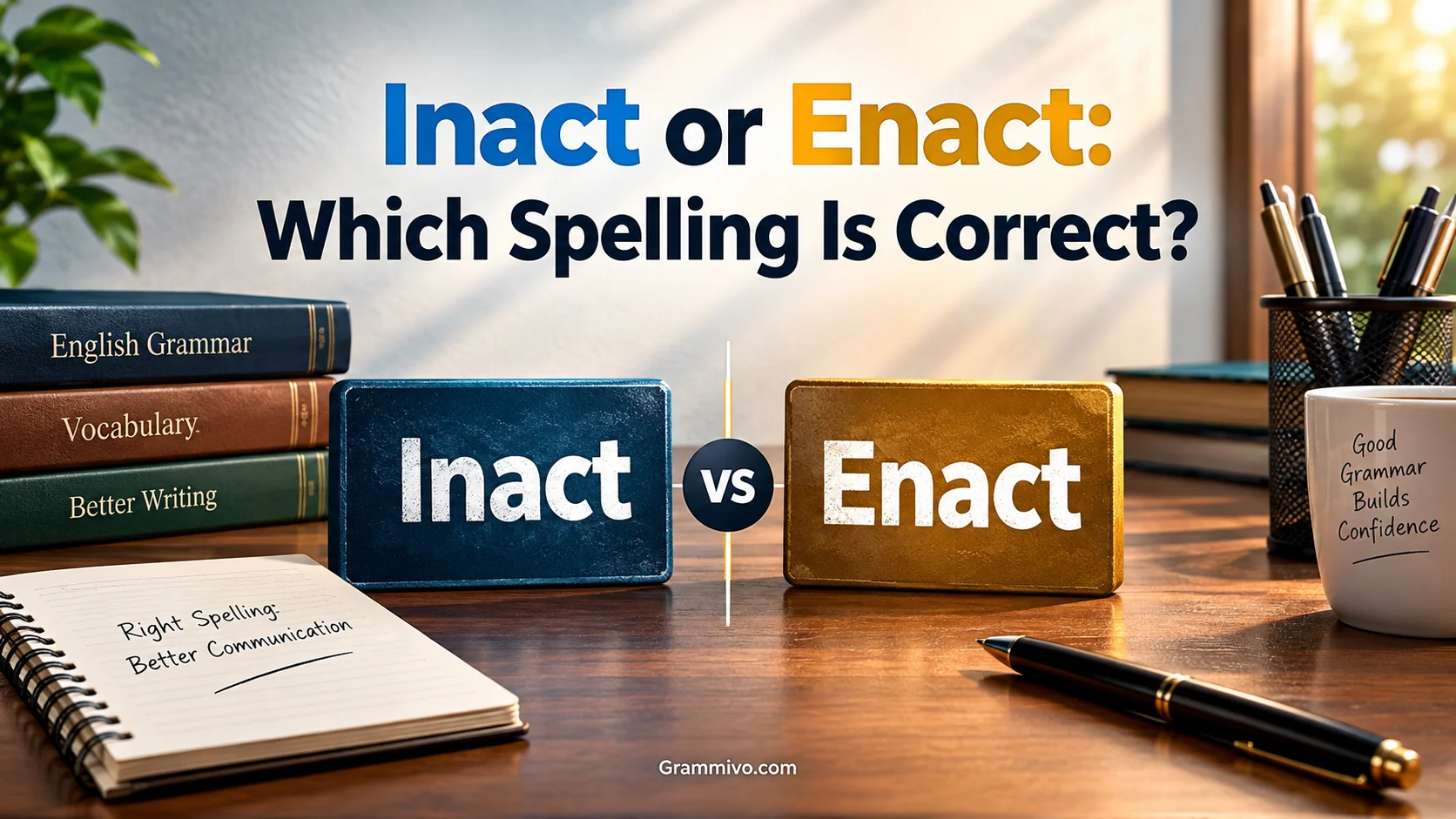
Inact or Enact

Writers often confuse Inact and Enact because they sound and look similar, but their meaning and usage are different. In standard English, Enact is the correct, commonly used word, while Inact is not a standard modern English verb for these purposes.  People may search for Inact or Enact to avoid mistakes in professional, academic, and … Read more
Anyway vs. Anyways: Meaning, Differences, and Correct Usage

Anyway vs. Anyways

When you’re confused about Anyway vs. Anyways, this quick guide explains the correct words, their similar meaning, and their proper usage in English. Anyway and anyways can create uncertainty because both words have a similar sound and meaning.  They are often used interchangeably in casual speech and conversations, but their grammatical correctness differs. Anyway is … Read more

Patient vs. Patience: Meaning, Differences, and Easy Examples

Patient vs. Patience

Patient and patience are a common word-choice mistake because these words look similar, sound similar, and express related ideas, but they are not interchangeable. When you write a sentence, their grammatical role makes the difference clear.  Patient can describe a person’s behavior when they are calm, tolerant, and able to wait without becoming upset. Patience, … Read more

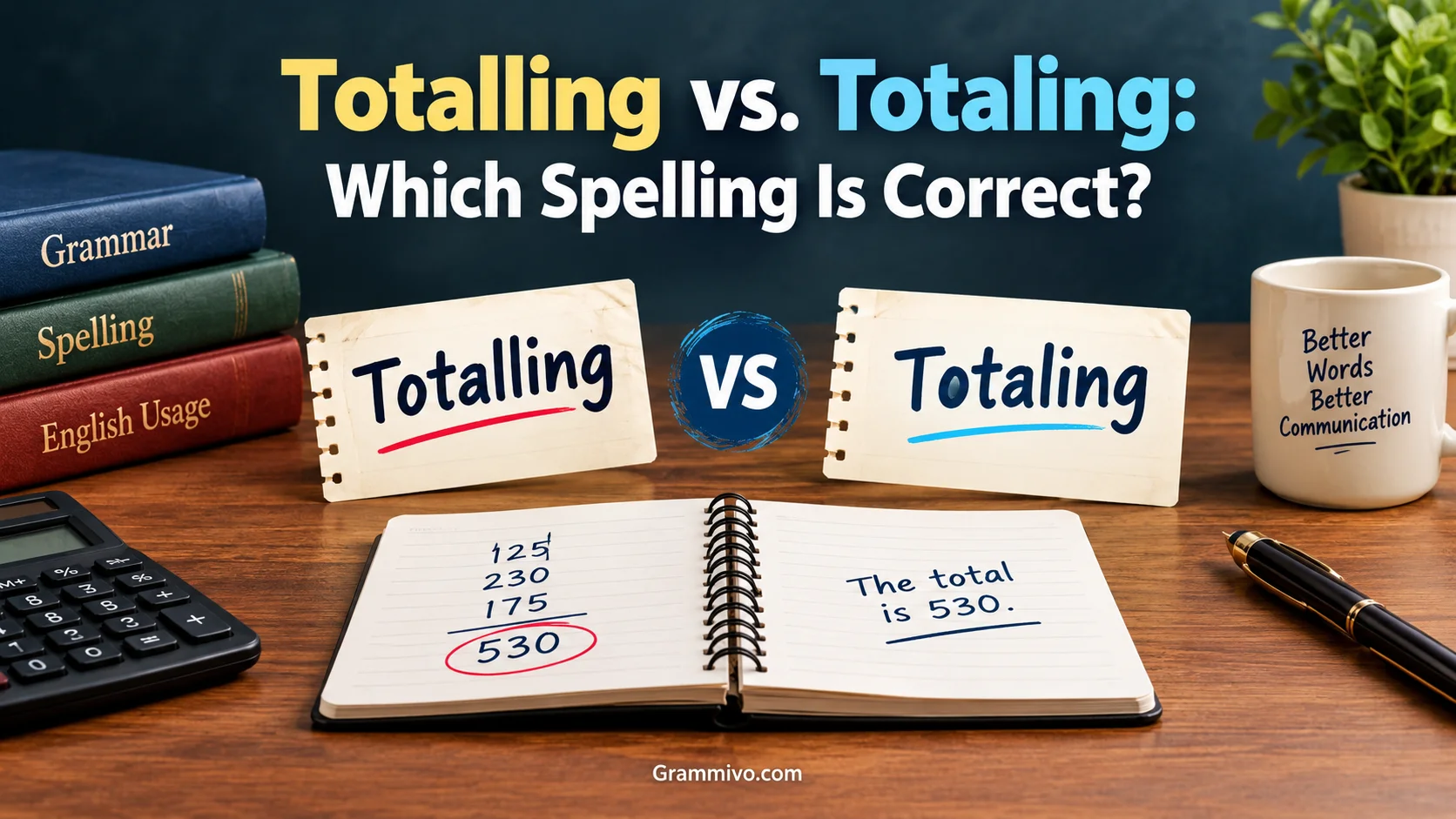
Totalling vs. Totaling: Which Spelling Is Correct?

Totalling vs. Totaling

Totalling vs. Totaling shows a regional spelling difference: British English uses totalling, while American English uses totaling. When you’re writing about numbers, expenses, budgets, scores, or financial calculations, this difference can cause confusion. The spelling rule is straightforward.  British usage keeps a double l before adding the -ing suffix, while American usage keeps a single … Read more

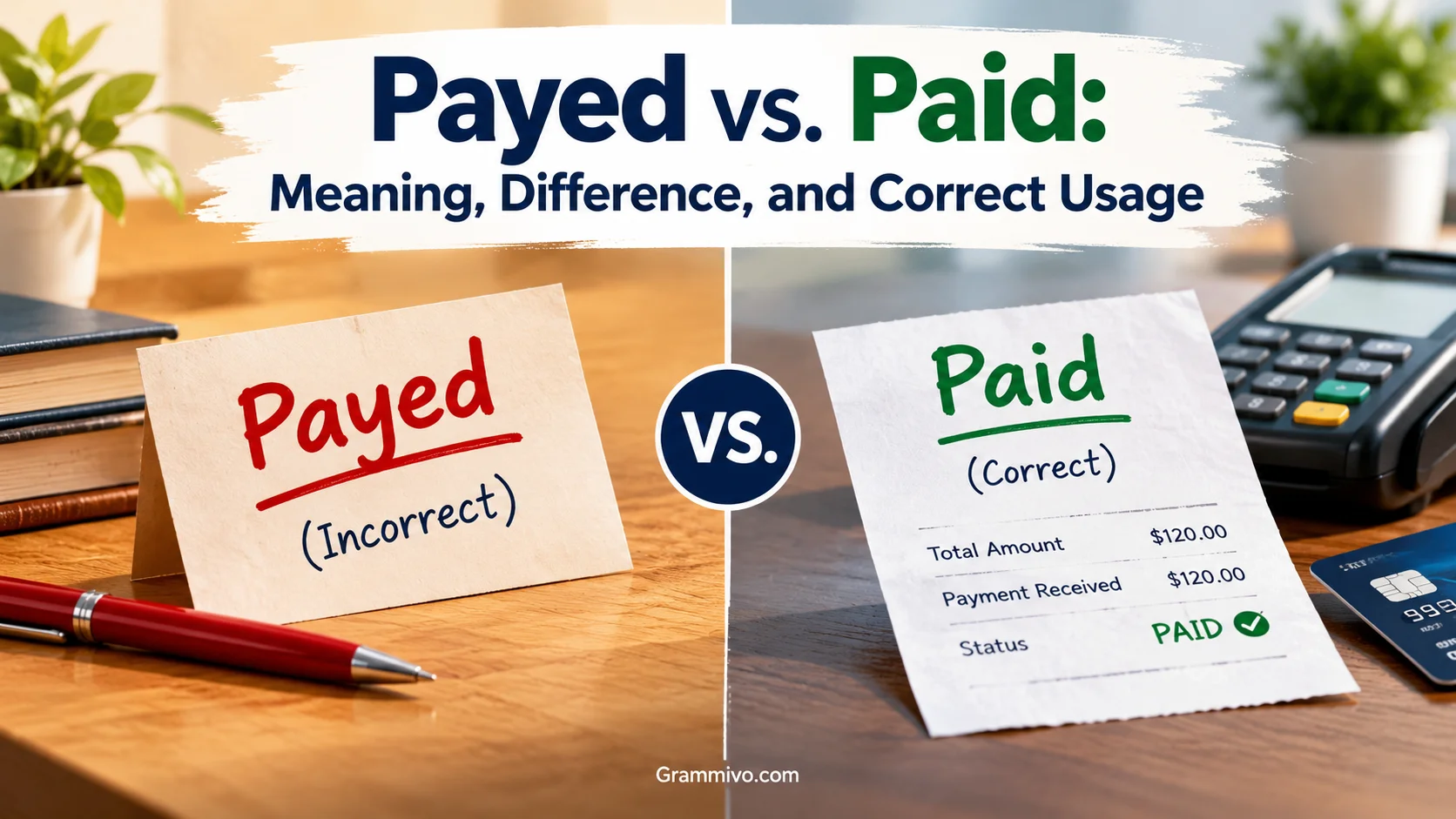
Payed vs. Paid: Meaning, Difference, and Correct Usage

Payed vs. Paid

With Payed vs. Paid, English learners can avoid spelling confusion by using paid for ordinary money and transactions every day. Students, writers, and professionals may find these words similar, especially because many English verbs are regular verbs that follow the -ed pattern.  For example, play becomes played, while stay becomes stayed, so people may assume … Read more

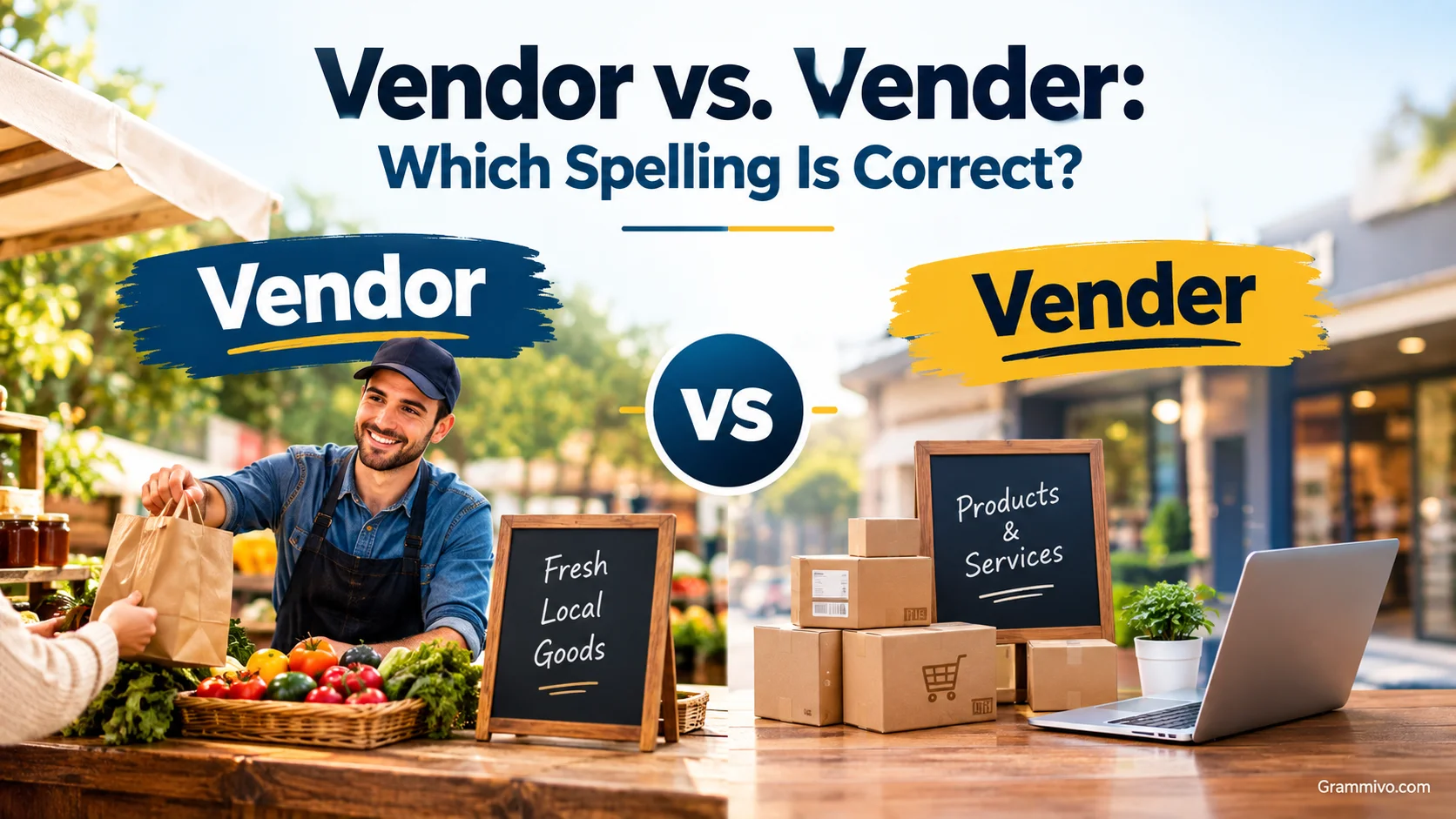
Vendor vs. Vender: Which Spelling Is Correct?

Vendor vs. Vender

Vendor vs. Vender explains the difference between the correct spelling and an older spelling used less often in modern English. Vendor is the standard and preferred spelling for a seller, supplier, person, company, or business that sells goods or provides services to customers and organizations.  Its common usage appears in retail, e-commerce, procurement, contracts, legal … Read more

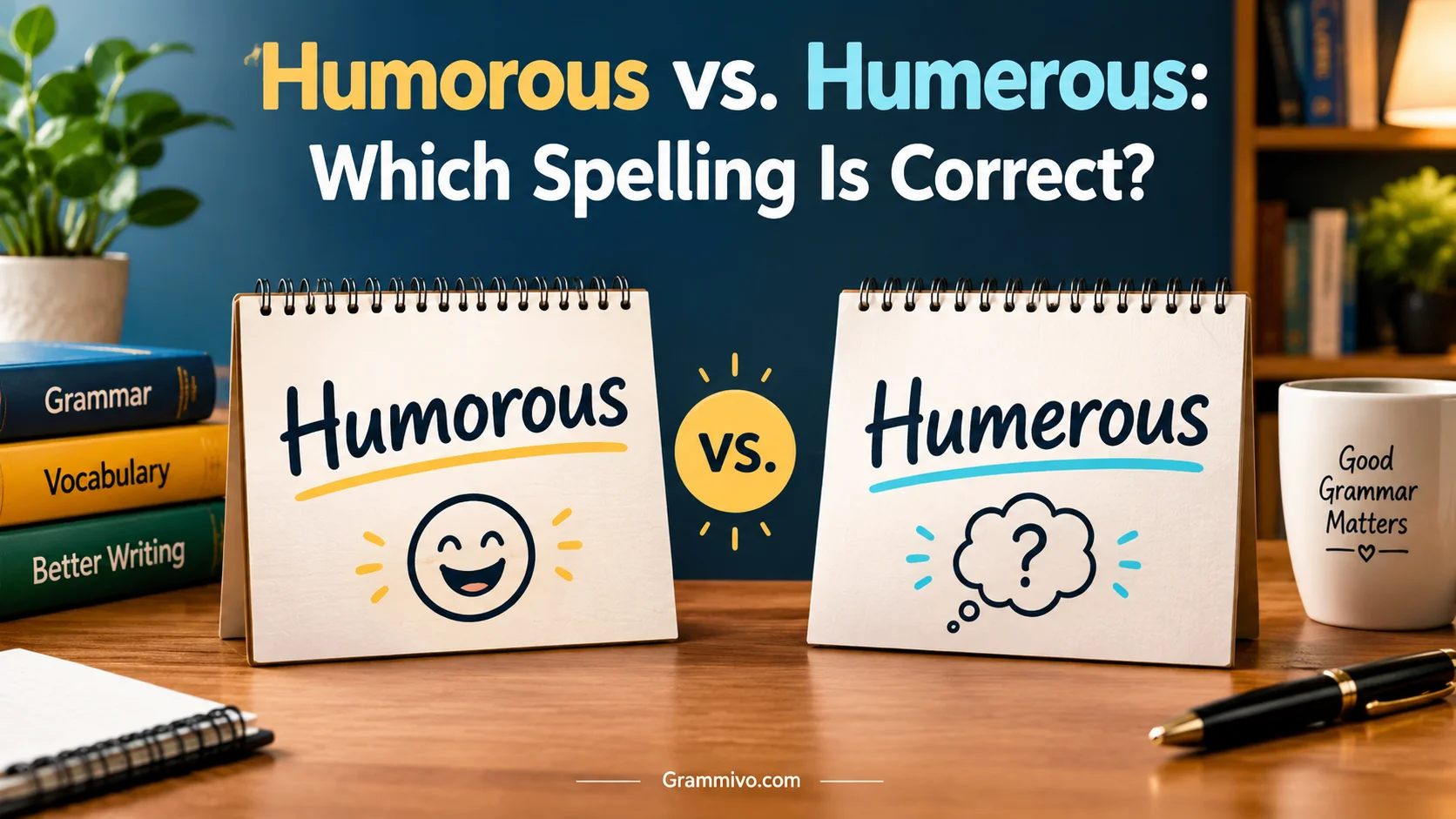
Humorous vs. Humerous: Which Spelling Is Correct?

Humorous vs. Humerous

If you’ve ever hesitated between humorous and humerous, you’re not alone. The two spellings look almost identical, and their pronunciation can make the difference even harder to notice. One small letter, however, separates the correct spelling from a common mistake. When you want to describe something funny, amusing, or likely to make people laugh, the … Read more