Planning or Planing: Meaning, Difference, and Correct Usage

Planning or Planing

Have you ever wondered whether to write planning or planing? You’re not alone. These two words look almost identical, and the difference comes down to just one letter. However, that small spelling change completely alters their meanings. The confusion often appears when you’re writing about future goals, organizing an event, preparing a project, or discussing … Read more

Finaly or Finally: Which Spelling Is Correct? 

Finaly or Finally

Have you ever typed finaly instead of finally and wondered whether both spellings were acceptable? You’re not alone. This small spelling mistake happens frequently because the word sounds the same whether you write it with one L or two. However, English spelling follows specific patterns that determine which form is correct. The difference between finaly … Read more

Investor vs. Investee: Meaning, and Real-World Examples

Investor vs. Investee

Understanding the difference between an investor and an investee is essential when dealing with business funding, corporate finance, or investment agreements. Although these terms describe two sides of the same financial relationship, they represent very different roles. One party provides capital while the other receives and uses it. For example, when an entrepreneur receives funding … Read more

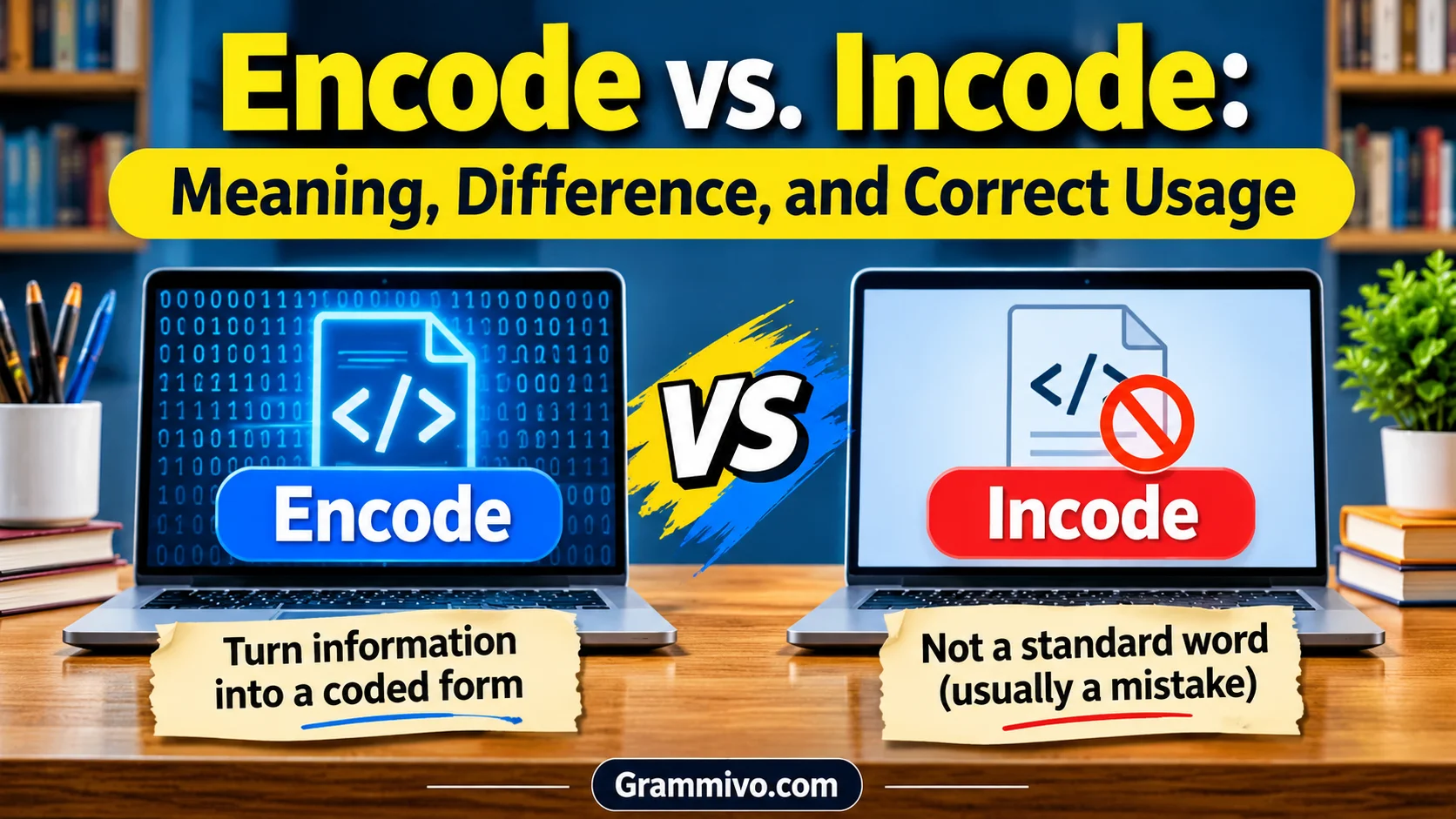
Encode vs. Incode: Meaning, Difference, and Correct Usage

Encode vs. Incode

Have you ever wondered whether the correct spelling is encode or incode? These two forms look similar at first glance. However, only one is a standard English word with an established meaning. The confusion often appears in writing about computers, digital information, data processing, and communication. You might see someone write incode when they actually … Read more

Insite vs. Insight: Meaning, Difference, and Correct Usage

Insite vs. Insight

Have you ever wondered whether to write insite or insight? These two spellings look almost identical, which makes them easy to confuse. However, only one is a standard English word with a recognized meaning. The confusion often appears in emails, workplace conversations, academic writing, and everyday messages. Someone might write, “Your feedback gave me valuable … Read more