Drier vs. Dryer: Meaning, Differences, and Easy Examples

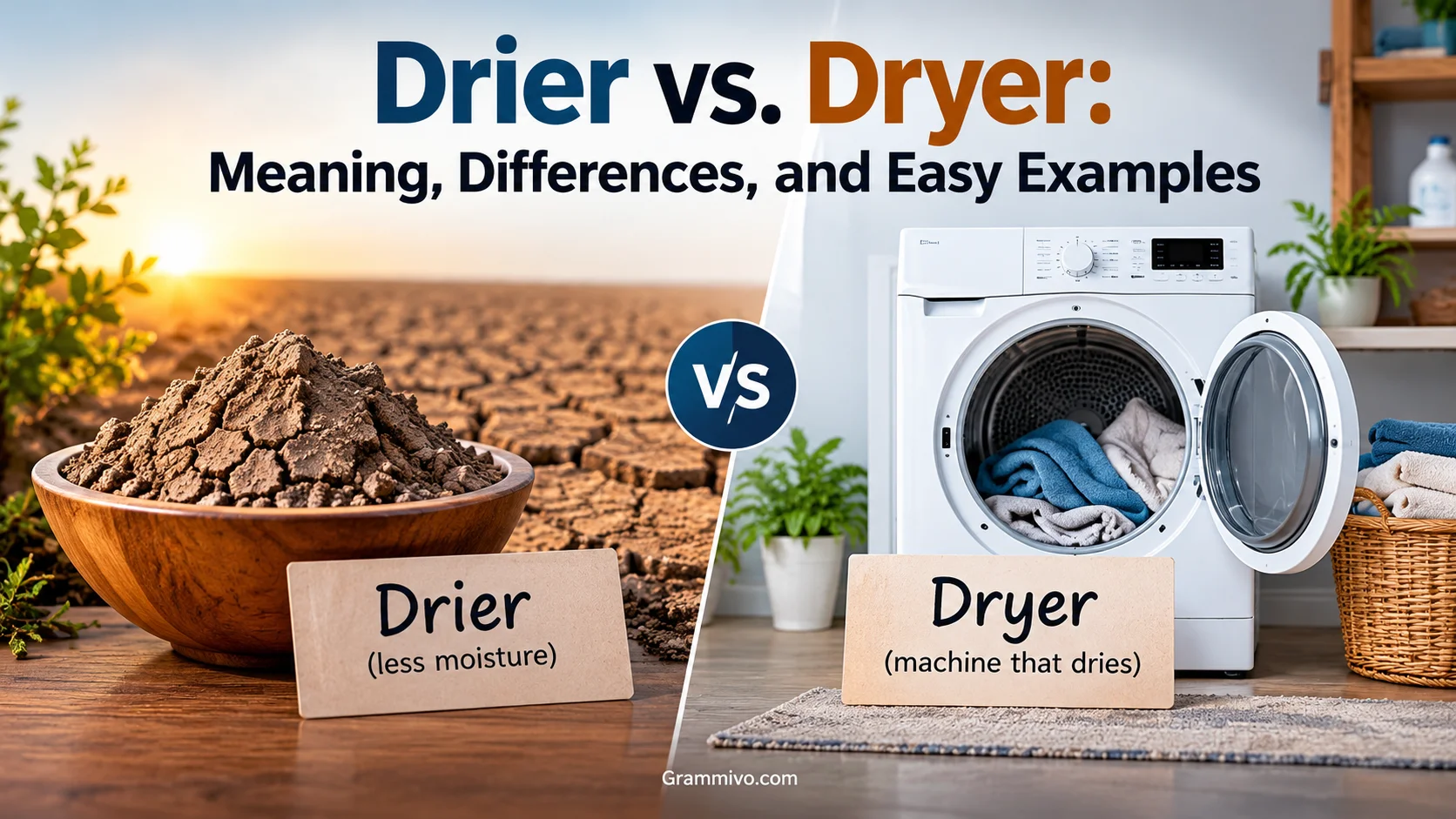
Drier vs. Dryer

Drier vs. Dryer can confuse students, learners, bloggers, and professional writers because the words look similar and mean different things. In English, drier usually means more dry, while dryer commonly means a machine, device, or appliance that dries something by removing moisture.  For example, drier weather describes less moist weather, while a hair dryer dries … Read more

Tomatoes vs. Tomatos: Which Spelling Is Correct?

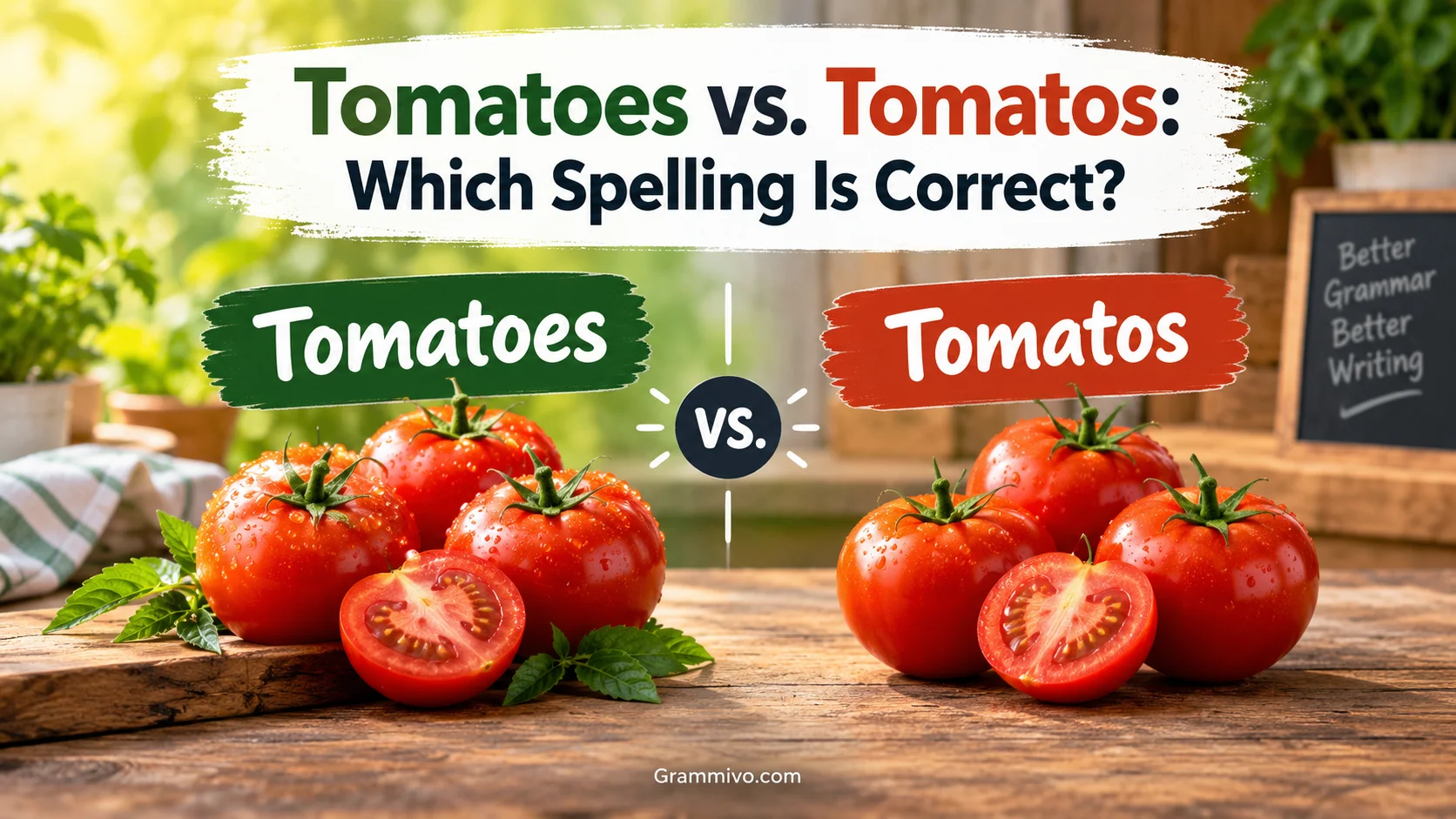
Tomatoes vs. Tomatos

For Tomatoes vs. Tomatos, confused and unsure writers can quickly learn the correct spelling and avoid a common mistake. If you’ve ever paused mid-sentence, this common spelling question can make English writing feel tricky. Both forms look similar, but Tomatoes is correct, while Tomatos is the wrong form and incorrect in standard English spelling.  The … Read more

Puting vs. Putting: Which Spelling Is Correct?

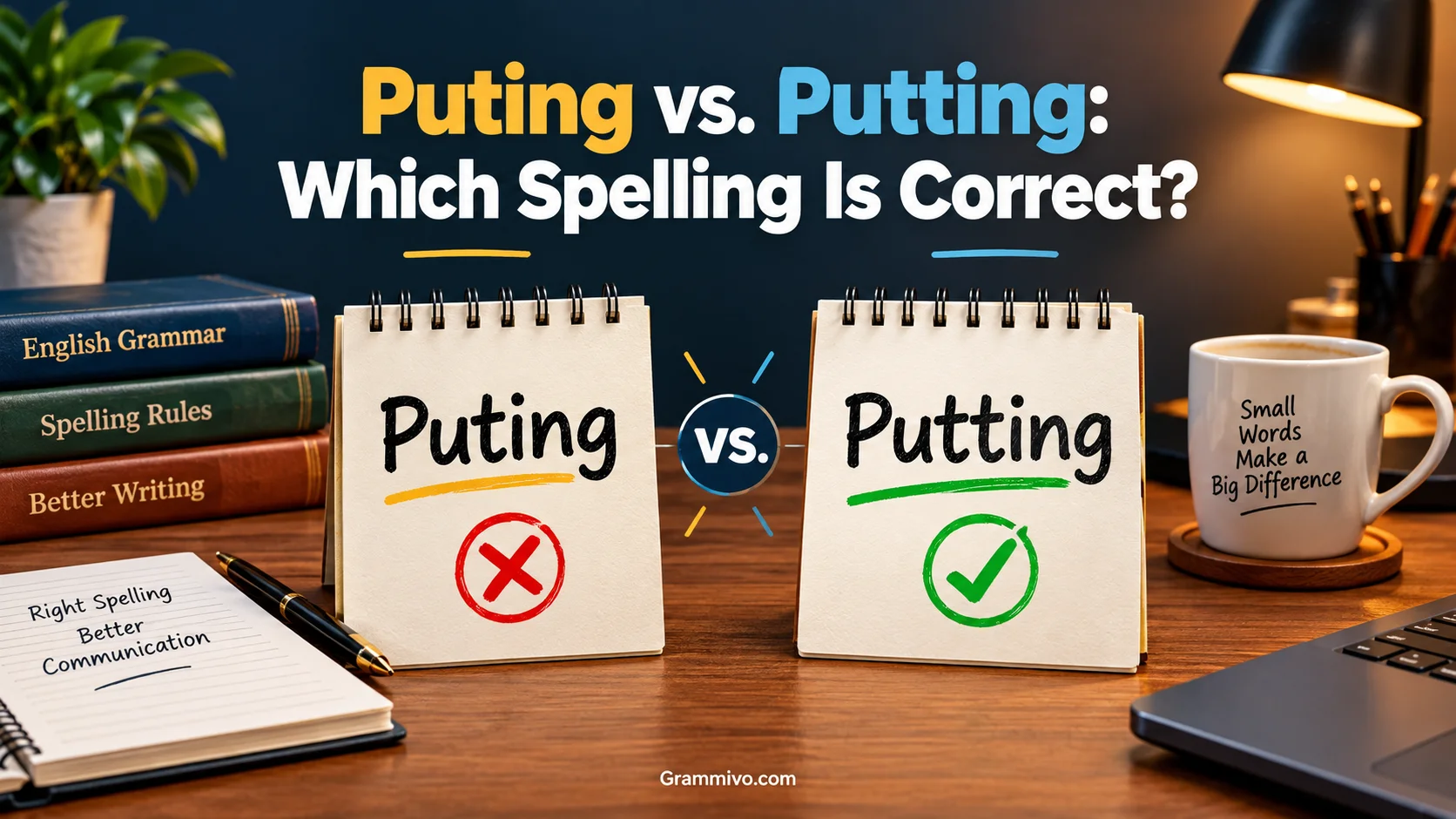
Puting vs. Putting

Puting vs. Putting can confuse English learners, but the correct spelling is Putting, following standard English spelling rules for adding -ing. Puting and Putting are similar words, so learners may feel confused when they frequently search for puting or putting and need a quick, clear answer.  The right version is Putting, formed from the verb … Read more

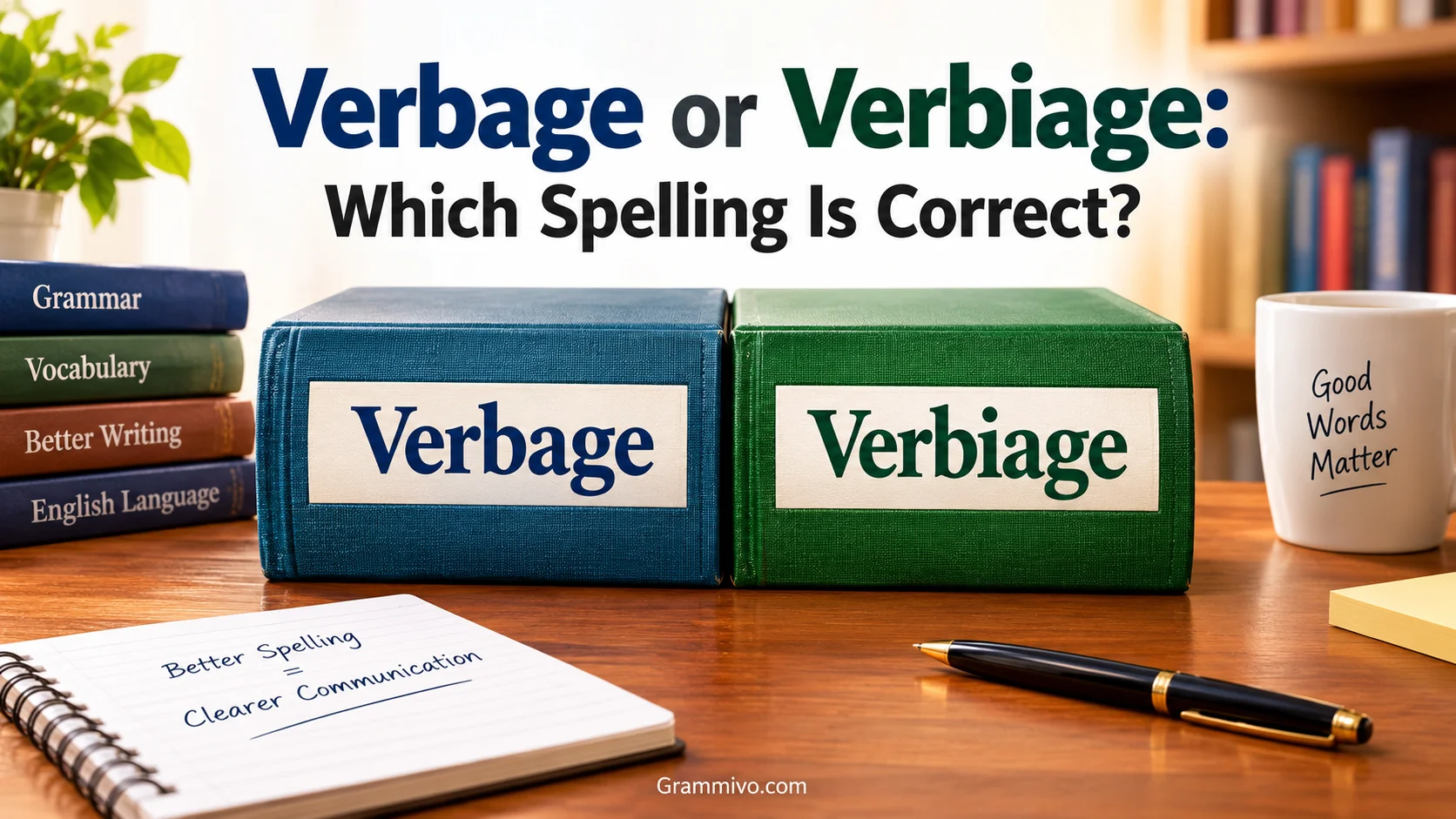
Verbage or Verbiage: Which Spelling Is Correct?

Verbage or Verbiage

If you’ve ever written “verbage” and wondered whether it looks right, you’re not alone. The word verbiage is the correct spelling in standard English, while verbage is a commonly encountered nonstandard form.  This confusion is understandable because “verbage” appears frequently in online discussions, emails, business documents, and professional communication. When the word is spoken aloud, … Read more

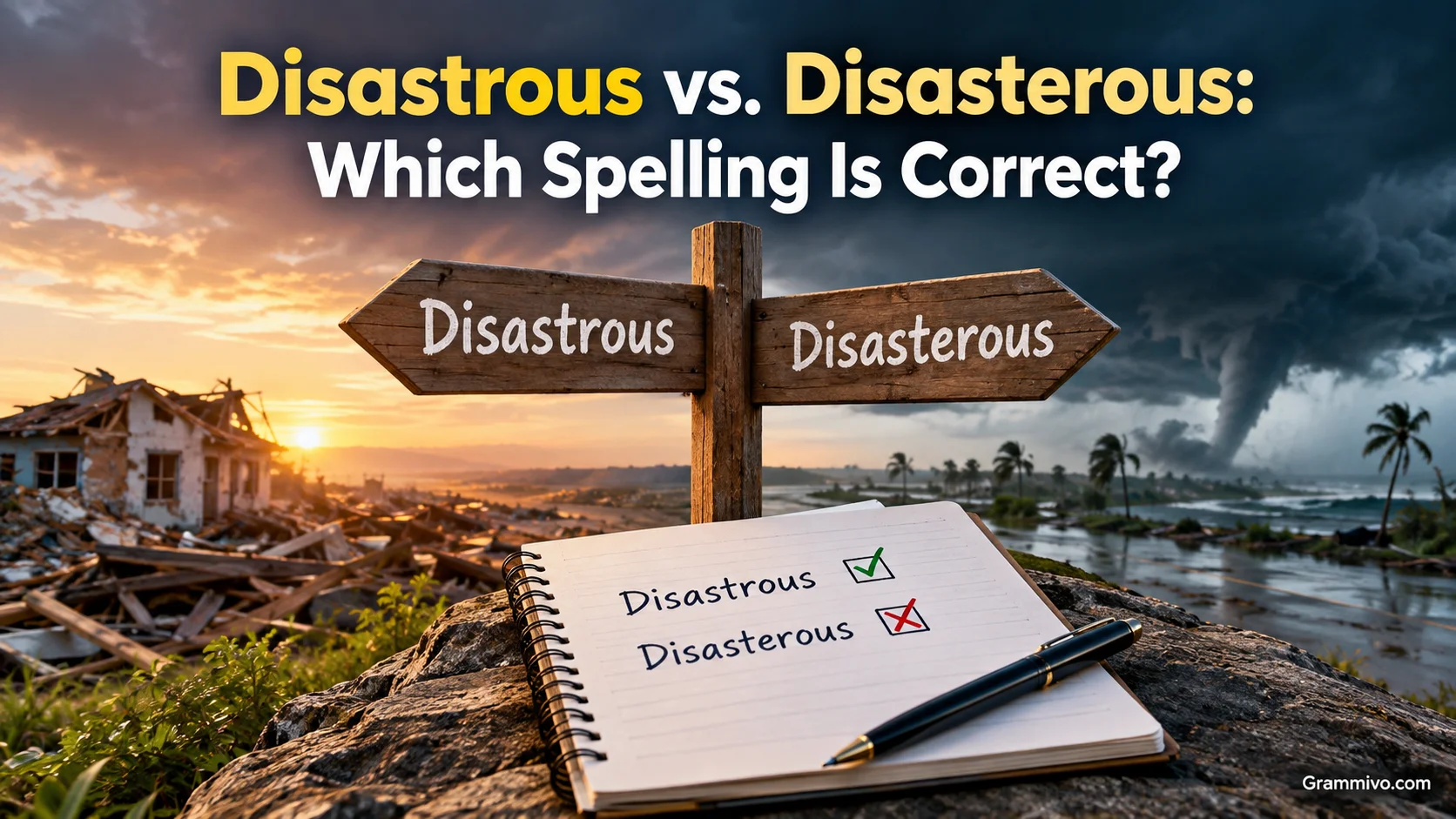
Disastrous vs. Disasterous: Which Spelling Is Correct?

Disastrous vs. Disasterous

Disastrous vs. Disasterous: the correct spelling is disastrous, while disasterous is a common misspelling caused by the noun disaster and its “-ter” ending. The adjective takes the adjective ending “-ous,” creating a small word change when the suffix is added.  English spelling doesn’t always let you mirror the original noun, so disastrous is the correct … Read more